How to Dispose of Trash in Japan: A Tourist's Guide
 komatsuna_admin
Japan is famous for its clean streets, orderly public spaces, and well-maintained train stations. Yet many first-time visitors discover something surprising: finding a public trash can can be harder than expected.
After enjoying an onigiri, a takeaway coffee, or a delicious street-food snack, you might find yourself wondering, “Where am I supposed to throw this away?”
Don’t worry. You don’t need to memorize complicated rules to handle trash responsibly in Japan.
This guide explains where to find appropriate disposal points, how to sort common types of waste, what to do when there is no trash can nearby, and how a few simple habits can help you enjoy Japan while respecting the people who live and work there.
1. Why Are Public Trash Cans Hard to Find in Japan?
Japan’s clean streets can seem especially surprising when public trash cans are not always easy to find.
There is no single explanation.
Security concerns have played a role. Following the 1995 Tokyo subway sarin attack, some public trash cans were removed from transportation facilities and other public spaces. Waste management costs, recycling requirements, and decisions by individual facility operators also influence where bins are provided.
But it would be misleading to say that Japan has no public trash cans. Availability varies considerably by city, station, neighborhood, and facility.
Some tourist attractions and shopping areas provide clearly marked bins. Other places expect visitors to take their waste away.
One practical habit is especially useful: if you cannot find a suitable trash can, keep your trash with you until you can dispose of it properly.
2. Where Can Tourists Throw Away Trash in Japan?
The best disposal option depends on where you are and what kind of trash you have.
Convenience Stores
Some Japanese convenience stores have trash bins, often near the entrance or inside the store.
However, not every store provides them, and a bin may be intended only for waste from products purchased at that location.
If you have trash from somewhere else, ask a staff member before using the bin. Do not leave waste beside a bin or outside the store.
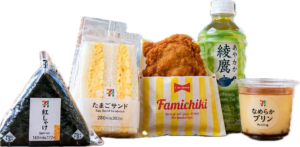
Convenience stores are also great places to discover Japanese snacks, meals, and drinks. For ideas, read our guide: What to Buy at Japanese Convenience Stores: 15 Must-Try Foods and Snacks.
Train Stations
Some railway stations provide bins for certain types of waste, but availability and accepted items vary by station and operator.
Recycling containers on train platforms are for designated recyclable items only. Do not put takeaway food packaging or general trash into them.
Always check the labels. If you cannot find an appropriate bin, take the item with you.
Vending Machines
You may see collection containers beside vending machines, especially those selling bottled or canned drinks.
These containers are generally intended for empty beverage containers—not food wrappers, coffee cups, cigarette butts, or other rubbish.
Even when the opening looks large enough, don’t put unrelated trash inside.
Hotels and Other Accommodations
Your hotel or accommodation is often one of the most convenient places to dispose of ordinary waste from your trip.
Use the bins provided in your room or shared areas, and follow any sorting instructions.
For unusually large items, hazardous waste, or anything that does not belong in a normal room bin, ask the staff first.
Restaurants, Food Stalls, and Tourist Attractions
Restaurants, food stalls, theme parks, and sightseeing facilities may provide designated disposal points for customers.
If you buy food from a stall, ask whether the vendor can take back the packaging after you finish eating. Some can, while others cannot.
Do not assume that a nearby business is responsible for collecting trash from food purchased elsewhere.
3. How to Separate Trash in Japan
Japan has detailed waste-sorting systems, but the rules are not identical everywhere.
Municipalities, businesses, railway operators, and other facilities may use different categories and collection procedures.
As a visitor, you do not need to become a recycling expert. The most useful skill is recognizing common labels and following the instructions where you are.
Burnable Waste
Labels such as Burnable Waste or Moeru Gomi (燃えるゴミ) may refer to items such as used tissues and certain food-soiled materials.
However, the exact classification varies by municipality and facility.
PET Bottles
Plastic beverage bottles are often collected separately.
Look for PET or PET Bottles on the collection container.
Some recycling systems ask users to remove caps and labels, while others provide different instructions. Follow the signs rather than assuming one rule applies everywhere.
Cans and Glass Bottles
Empty beverage cans and glass bottles may have separate collection points.
Do not mix them with ordinary trash when dedicated containers are available.
Never put cigarette butts inside empty drink cans. This contaminates containers intended for recycling and creates additional work for the people handling them.
Plastics and Other Materials
Plastic packaging, paper, food containers, and other materials may be sorted differently depending on local rules.
When unsure, check the bin label or ask staff.
Travel tip: Never force trash into a recycling container simply because it is the only bin you can find.
4. What Should You Do When There Is No Trash Can?
This is one of the most useful habits to learn before visiting Japan.
Carry your trash until you find an appropriate place to dispose of it.
A small reusable bag or sealable pouch can make this much easier.
For example:
- Keep a small bag in your daypack for wrappers and tissues.
- Close empty food containers securely to prevent leaks.
- Keep recyclable bottles separate when practical.
- Use a designated bin when one is available and accepts your type of waste.
- If a bin is full, find another one instead of leaving trash beside it.
You don’t need to carry large amounts of rubbish around all day. Planning ahead—such as finishing a drink where an appropriate collection point is available—can prevent inconvenience later.
5. Eating Outdoors: Enjoy the Food, Respect the Space
Trying Japanese street food is one of the pleasures of traveling in Japan.
From freshly grilled snacks to sweet treats, food can be an enjoyable part of exploring a neighborhood.
Eating outdoors is not universally prohibited. However, rules and expectations vary by location.
In crowded areas, sitting on the ground may block pedestrians, shop entrances, or narrow walkways. Instead, look for a designated eating area, a suitable bench, or another place where eating is permitted.
The most important rule is simple: don’t leave food scraps, cups, packaging, or takeaway containers behind.
A Real Example: Shibuya’s Local Rules
Shibuya, one of Tokyo’s best-known entertainment districts, has introduced measures to address littering and other problems in public spaces.
Since October 2024, drinking alcohol on streets and in other public places within designated areas around Shibuya Station has been prohibited from 6:00 p.m. to 5:00 a.m.
Separately, since June 2026, littering in Shibuya Ward has been subject to a ¥2,000 administrative fine.
These are different rules. The nighttime restriction concerns drinking alcohol in designated public areas, while the littering rule applies throughout Shibuya Ward.
They do not mean that all outdoor eating or sitting on the ground is automatically prohibited throughout Shibuya.
Local regulations can change, so check current signs and official guidance when visiting.
Travel tip: Enjoy the food, leave room for others to pass, and take every piece of packaging with you when you leave.
6. Can You Put Your Trash in a Convenience Store Bin?
Not always.
Even if a convenience store has a trash bin, it may be intended for waste generated by products purchased there.
If you have rubbish from another location, ask permission before using it.
A useful phrase is:
Kono gomi o sutete mo ii desu ka?
このゴミを捨ててもいいですか?
“May I throw this trash away here?”
If the answer is no, thank the staff and keep your trash until you find another suitable disposal point.
In some areas, local governments have introduced rules requiring certain food and drink sellers to provide waste bins. However, this does not necessarily mean that those bins must accept rubbish brought from elsewhere.
7. Don’t Leave Unwanted Suitcases at Your Hotel
Here is a travel situation that deserves more attention.
Imagine arriving in Japan with an old suitcase, buying plenty of souvenirs, and deciding to replace your luggage before flying home.
What should you do with the suitcase you no longer need?
Don’t simply leave it in your hotel room when you check out.
An unwanted suitcase is not ordinary room trash. Disposing of it may involve special collection arrangements, costs, or local waste regulations.
Leaving it without the hotel’s permission can create unnecessary work for staff.
Instead, contact the front desk before your departure.
Ask whether the hotel can help arrange disposal and whether a fee applies. Some accommodations may be able to assist, while others may not offer this service.
If the hotel cannot help, ask about a suitable local disposal service. Arrange the disposal before your departure day whenever possible.
You can say:
Furui sūtsukēsu o shobun shitai no desu ga, sōdan dekimasu ka?
古いスーツケースを処分したいのですが、相談できますか?
“I’d like to dispose of an old suitcase. Could you advise me?”
Travel tip: If your luggage is still usable, consider whether an appropriate reuse or donation option is available—but confirm that the organization actually accepts suitcases before leaving anything there.
8. Why Are Japan’s Streets So Clean?
Clean streets do not happen automatically, and they are not the result of one national personality trait.
Public cleaning services, waste collection systems, local rules, businesses, community groups, and individual behavior all play a part.
Some schools in Japan include classroom and school cleaning as part of everyday activities. This can introduce children to shared responsibility for the spaces they use.
Community cleanup activities are another visible example of people helping maintain public areas.
Of course, littering still occurs in Japan, and not everyone follows every rule. Cleanliness is an ongoing effort, not a perfect national characteristic.
Visitors can take part in that effort without feeling they must follow an intimidating list of customs.
Japan’s clean streets are not maintained by rules alone. Everyday consideration—from residents, businesses, visitors, and cleaning staff—also plays an important role.
Leaving a bench clean, keeping a walkway clear, and disposing of packaging responsibly are small actions, but they help everyone enjoy the same public spaces.
9. Six Trash Etiquette Mistakes to Avoid
Here are six common mistakes that are easy to prevent.
1. Leaving trash beside a full bin
If a bin is full, take your rubbish elsewhere. The ground next to it is not an additional collection point.
2. Putting food packaging into beverage recycling containers
A container for empty PET bottles or cans is not a general trash bin.
3. Assuming every convenience store accepts outside trash
Check the store’s policy and ask permission when necessary.
4. Leaving food scraps or containers on benches and sidewalks
Clean up after eating, whether you are near a busy sightseeing spot or on a quiet street.
5. Leaving bulky unwanted items behind
Suitcases and other large items may require special disposal arrangements. Ask your accommodation or an appropriate service provider before discarding them.
6. Throwing cigarette butts away or using empty drink cans as ashtrays
If you smoke, never throw cigarette butts onto streets, sidewalks, or other public spaces.
Another habit to avoid is using an empty drink can as a makeshift ashtray. Cigarette butts left inside cans contaminate containers intended for recycling, and abandoning a can filled with cigarette butts creates an additional burden for the people who have to clean it up.
This is not a problem limited to tourists or any particular nationality. It is a matter of consideration for everyone who shares public spaces.
Smoke only where permitted, and dispose of cigarette butts in designated ashtrays or other appropriate facilities.
An empty can is not an ashtray, and a public space is not a place to leave your cigarette butts behind.
10. Useful Japanese Words and Phrases for Trash Disposal
A few words can make everyday situations much easier.
- Gomi (ゴミ) — Trash or garbage
- Gomibako (ゴミ箱) — Trash can or trash bin
- Moeru gomi (燃えるゴミ) — Burnable waste
- Moenai gomi (燃えないゴミ) — Non-burnable waste
- PET botoru (ペットボトル) — PET bottle
- Akikan (空き缶) — Empty can
- Haizara (灰皿) — Ashtray
- Mochikaeri (持ち帰り) — Taking something away or home
Gomibako wa doko desu ka?
ゴミ箱はどこですか?
“Where is the trash can?”
Kono gomi o sutete mo ii desu ka?
このゴミを捨ててもいいですか?
“May I throw this trash away here?”
Kore wa doko ni sutereba ii desu ka?
これはどこに捨てればいいですか?
“Where should I dispose of this?”
Haizara wa doko desu ka?
灰皿はどこですか?
“Where is the ashtray?”
You do not need perfect pronunciation. A polite question and a willingness to follow instructions can go a long way.
11. Frequently Asked Questions
Is Littering Illegal in Japan?
Littering is prohibited by local ordinances in many parts of Japan, although the rules and penalties vary by location.
But whether or not there is a legal penalty, it is worth thinking about how leaving trash behind affects others.
Imagine finding someone else’s food wrappers, empty cups, or other rubbish outside your own home. It probably wouldn’t be a pleasant experience.
The same is true for people who live and work in the places you visit. Abandoned trash can create extra work for local residents, shopkeepers, and cleaning staff, and may leave a negative impression of visitors.
You don’t need to know every local regulation to be a considerate traveler. Simply take responsibility for your own trash, respect shared spaces, and leave each place as you would hope to find it.
Can I Use a Convenience Store Trash Bin If I Didn’t Buy Anything?
Do not assume you can. Some stores restrict their bins to waste from products purchased there. Ask staff for permission first.
Where Should I Throw Away a Used Coffee Cup?
Use a suitable bin at the place where you purchased the drink if one is provided and its rules allow it. Otherwise, carry the cup until you find an appropriate disposal point. Do not put it into a container intended only for empty bottles or cans.
Can Tourists Use Residential Neighborhood Trash Collection Points?
Generally, you should not use residential collection points for your personal travel waste unless you have been specifically authorized to do so. Those locations operate under local collection rules and may be intended for designated residents or properties.
What Should I Do With Trash After Eating Street Food?
Ask the vendor whether it accepts used packaging. If not, take your trash with you until you find a suitable bin.
Can I Leave an Unwanted Suitcase in My Hotel Room?
Do not leave it without permission. Ask the hotel whether disposal assistance is available, whether there is a fee, and what alternatives exist if the hotel cannot accept it.
Final Thoughts: Leave Japan as Clean as You Found It
Japan’s streets can feel remarkably clean, but keeping shared spaces pleasant takes effort from many people.
As a visitor, you are not expected to know every local recycling rule or understand every municipal ordinance.
A little preparation is enough to make a meaningful difference.
Carry a small trash bag, follow the signs, ask when unsure, and never leave unwanted items behind without permission.
Above all, enjoy the experience. Trying local food, exploring neighborhoods, and discovering everyday Japanese customs are some of the best parts of traveling here.
A simple habit—taking responsibility for the things you use—helps keep those experiences enjoyable for everyone.