How to Use an Onsen in Japan: Bathing Etiquette, Private Baths & 5 Famous Hot Spring Destinations
 komatsuna_admin
Japan's hot springs, known as onsen, are much more than places to take a bath. They offer a chance to relax, appreciate nature, and experience one of Japan's most distinctive cultural traditions.
From open-air baths surrounded by mountains to historic hot spring towns and unusual sand baths, Japan offers an extraordinary variety of onsen experiences.
For first-time visitors, however, Japanese bathing customs can raise some questions. Do you have to be naked? Are men and women separated? Can you enter with tattoos? And what should you do before getting into the water?
This guide explains how to use an onsen, essential bathing etiquette, private bath options, and five famous hot spring destinations—including Ibusuki's remarkable sand baths.
1. What Is an Onsen in Japan?
Japan is a volcanically active country with natural hot springs found throughout its islands.
Under Japanese law, a natural spring qualifies as an onsen when its water or vapor meets specified temperature or mineral-content requirements. This means that an onsen is not necessarily extremely hot.
Depending on the location and minerals present, onsen water can be clear, milky white, brownish, or even have a distinctive sulfur-like smell.
Onsen vs. Sento: What's the Difference?
Japan also has traditional public bathhouses called sento.
Sento developed as neighborhood bathing facilities and commonly use heated tap water, although some also use natural hot spring water.
An onsen, by contrast, uses water that meets Japan's legal definition of a natural hot spring. Despite this difference, many bathing rules are similar.
2. Do You Have to Be Naked in a Japanese Onsen?
In most traditional Japanese onsen, guests bathe completely naked, without swimsuits or underwear.
This may surprise visitors who are accustomed to wearing swimsuits at spas or thermal baths in other countries. In Japan, however, nude communal bathing is a long-established custom.
Men's and Women's Baths Are Usually Separate
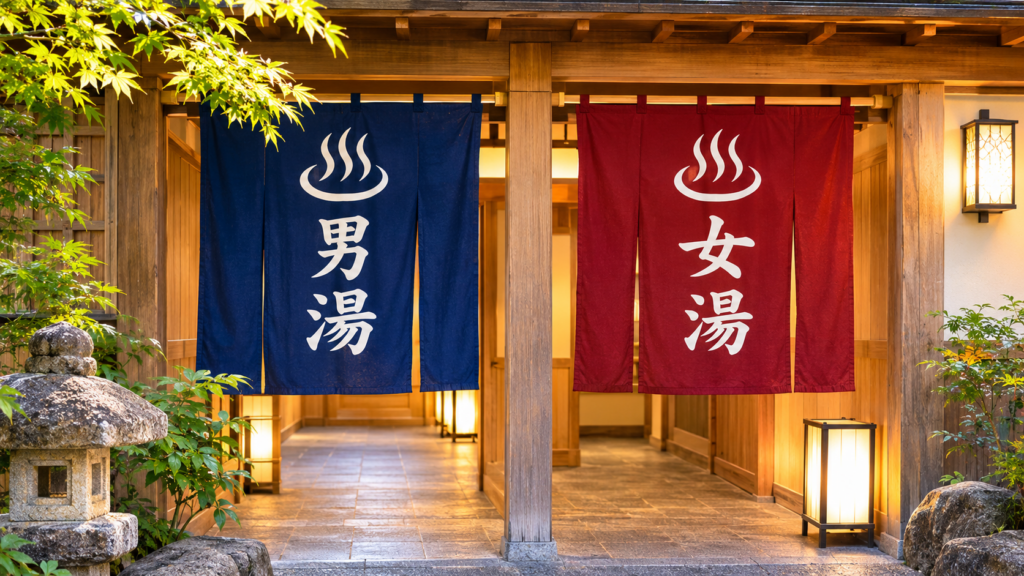
Most Japanese onsen have separate bathing areas for men and women.
- 男湯 (otoko-yu): Men's bath
- 女湯 (onna-yu): Women's bath
Some facilities also display English signs such as "Men" and "Women." At certain ryokan, the men's and women's bathing areas may switch at different times of day, so always check the entrance signs.
Mixed-gender baths exist but are less common and may have special rules. Some spa-style facilities also require swimsuits. Follow the policy of the specific facility you visit.
What If You Feel Uncomfortable Bathing Naked?
You do not have to use a communal bath to enjoy Japan's hot spring culture.
Many ryokan and hotels offer private baths or guest rooms with their own bathing facilities. These can be particularly appealing to couples, families, and travelers who prefer more privacy.
3. How to Use an Onsen: Step by Step
Step 1: Check In and Pay
At a day-use onsen, you usually pay an admission fee at the reception desk or a ticket machine.
If you are staying at a ryokan, access to the communal baths is often included in your accommodation rate. Check whether towels are provided, available for rent, or must be brought separately.
Step 2: Undress in the Changing Room
Enter the appropriate changing room and remove all your clothing, including underwear.
Store your belongings in a locker or the designated storage area. You can usually take a small washcloth into the bathing area, but it must not go into the bathwater.
Step 3: Wash Your Body Before Entering the Bath
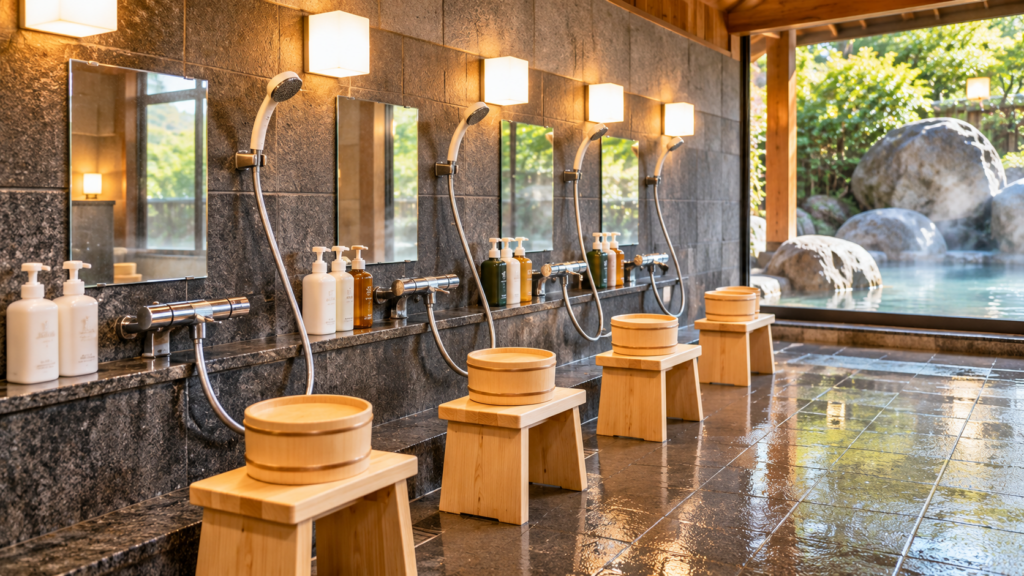
Washing before entering the communal bath is one of the most important rules of Japanese onsen etiquette.
Most facilities have washing stations with showers, stools, and buckets. Sit down, wash your body thoroughly with soap or body wash, and rinse off completely.
Do not enter the bath with soap or shampoo on your body. At facilities without conventional washing stations, follow the instructions for rinsing or pouring water over yourself before entering.
Step 4: Enter the Water Slowly
Once you are clean, enter the bath carefully and relax.
Onsen baths are for soaking, not swimming. Avoid splashing, jumping into the water, or disturbing other guests.
Are Japanese Onsen Baths Hot?
Some Japanese onsen baths are maintained at around 40–42°C (104–108°F), and certain baths may be even hotter. Temperatures vary considerably between facilities and individual pools.
If you are accustomed to relatively mild thermal spas in Europe or elsewhere, the water at a Japanese onsen may feel surprisingly hot.
- Test the water temperature with your hand or foot before entering.
- Enter slowly rather than immersing yourself suddenly.
- Begin with a short soak, especially if you are unfamiliar with hot baths.
- Never force yourself to remain in very hot water.
- Leave the bath immediately if you feel dizzy, faint, unusually uncomfortable, or notice a racing heartbeat.
- Drink enough water before and after bathing.
Some onsen facilities offer several baths at different temperatures, allowing visitors to choose a more comfortable option.
You do not need to tolerate extreme heat or stay in the water for a long time to enjoy an onsen. Choose a temperature and duration that feel comfortable for you.
Step 5: Dry Off Before Returning to the Changing Room
Before leaving the bathing area, use your small towel to wipe excess water from your body. This helps keep the changing-room floor dry.
Whether you rinse your body again after soaking depends on personal preference, the mineral content of the water, and the facility's instructions.
4. Essential Japanese Onsen Etiquette
Keep Towels Out of the Bathwater
A small towel can be used for washing or modesty while walking through the bathing area, but do not immerse it in the communal bath. Place it beside the bath where permitted.
Keep Long Hair Out of the Water
If you have long hair, tie it up so it does not touch the bathwater.
Do Not Wash Yourself in the Bathtub
Use the designated washing area for soap, shampoo, and body washing. The shared bath is for soaking and relaxing.
Keep Your Voice Down
Quiet conversation is generally fine, but avoid shouting or disturbing other guests.
Do Not Take Photos or Videos
Photography and video recording are generally prohibited inside communal bathing areas and changing rooms.
Some facilities also prohibit bringing smartphones into these areas. Respect other guests' privacy, even when the bath appears empty.
Avoid Bathing After Drinking Alcohol
Alcohol, very hot water, and prolonged soaking can increase the risk of dizziness, falls, and other health problems. Avoid bathing after drinking and take breaks when needed.
Want a more detailed explanation of bathing customs? Read our beginner's guide to Japanese onsen rules and etiquette for step-by-step instructions and practical advice.
5. Can You Enter an Onsen with Tattoos?
Some Japanese onsen restrict entry for guests with tattoos. These policies have historical roots in the association of tattoos with organized crime in Japan.
However, not all onsen prohibit tattoos. Some facilities welcome tattooed guests, while others allow small tattoos if they are covered with approved waterproof patches.
Covering a tattoo does not automatically guarantee admission. Rules vary by facility.
Before visiting, check the onsen's official website or contact the staff. You can ask:
"Are guests with tattoos allowed to use the public baths?"
If communal bathing is not possible, a private bath or a room with its own bath may be an alternative. Confirm the facility's policy before booking.
6. Private Baths and Rooms with Open-Air Onsen
Private Baths (Kashikiri-buro)
A kashikiri-buro is a bath reserved for private use by an individual or group, often for a fixed period.
Some are called kazoku-buro, or family baths. They can be suitable for couples, families, or anyone uncomfortable bathing in front of strangers.
Advance reservations, time limits, and additional fees may apply.
Guest Rooms with Private Open-Air Baths
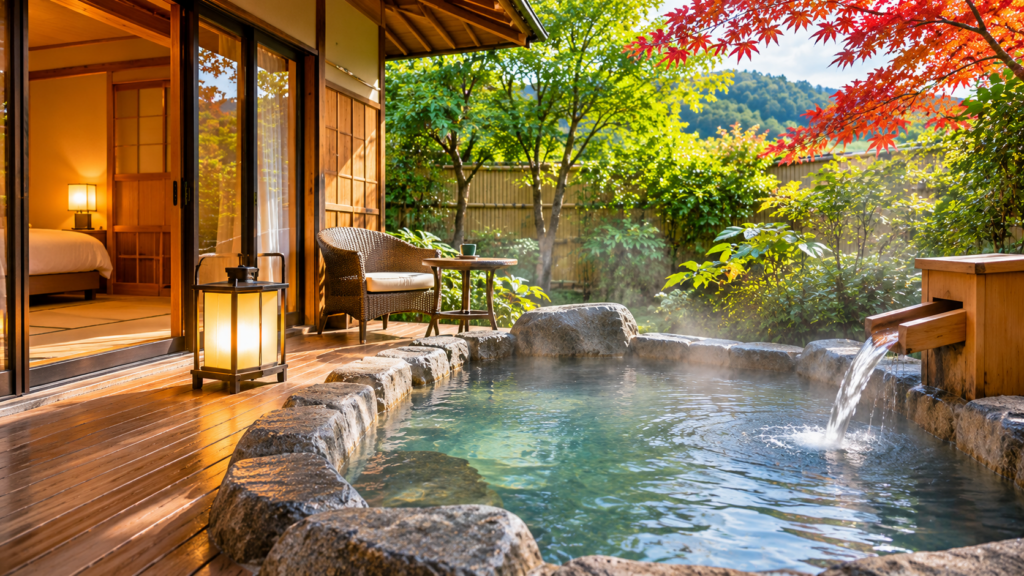
Some ryokan and hotels offer rooms with their own open-air baths, sometimes overlooking mountains, gardens, or the sea.
These rooms provide a private bathing experience without sharing the bath with other guests.
However, not every private bath uses natural hot spring water. Check whether the room's bath is actually supplied with onsen water before booking.
Rooms with private open-air baths also tend to cost more than standard rooms.
7. Different Ways to Enjoy Japanese Hot Springs
Open-Air Baths (Rotenburo)
A rotenburo is an outdoor bath. Depending on the location, you may enjoy views of mountains, forests, autumn leaves, snow, or the ocean while soaking.
Foot Baths (Ashiyu)
An ashiyu is a foot bath where you soak only your feet in warm water. You can usually enjoy one without undressing, making it an easy introduction to hot spring culture.
Some foot baths are free, while others charge a small fee.
Day-Use Onsen
You do not always need to stay overnight at a ryokan to enjoy an onsen. Many facilities offer day-use bathing, known as higaeri onsen.
Availability, opening hours, and admission conditions vary, so check before visiting.
8. Five Famous Onsen Destinations in Japan
Japan has many outstanding hot spring destinations. These five offer different experiences, from traditional town walks to a remarkable sand bath.
1. Hakone Onsen — Kanagawa Prefecture
Hakone is a popular hot spring destination within reach of Tokyo, making it a convenient choice for travelers who want to combine city sightseeing with a relaxing onsen stay.
The area has numerous hot spring districts, ryokan, and hotels. Visitors can also explore Lake Ashi, museums, mountain scenery, and the Hakone Ropeway.
On clear days, Mount Fuji can be seen from certain locations in the wider Hakone area, although a Fuji view is not guaranteed from every onsen.
Recommended for: First-time visitors who want to combine a hot spring experience with a trip from Tokyo.
Official travel information: Hakone Navi.
2. Kusatsu Onsen — Gunma Prefecture
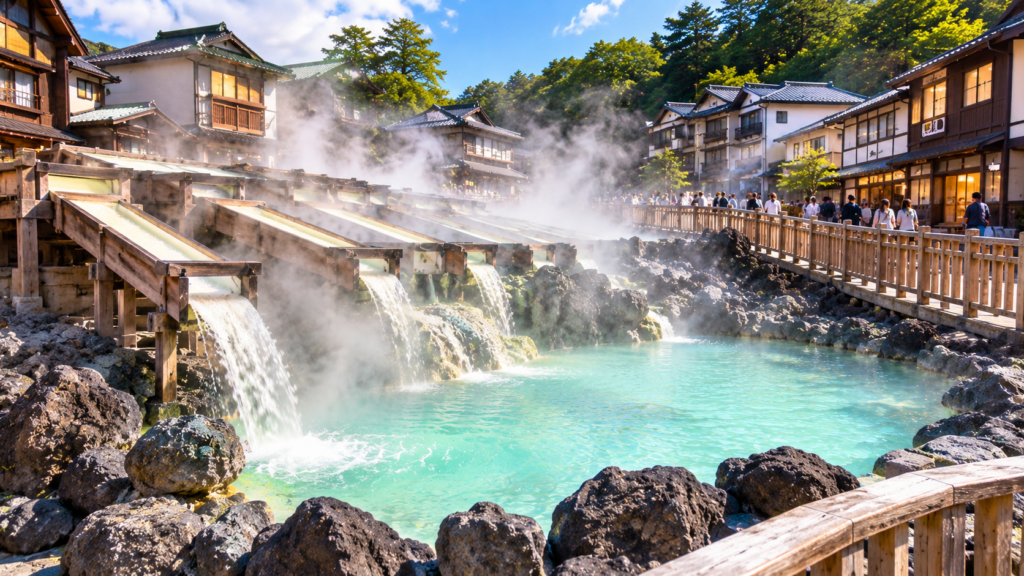
Kusatsu is known for its abundant hot spring water and atmospheric traditional town center.
Its most recognizable landmark is the Yubatake, where steaming hot spring water flows through wooden channels in the heart of town.
Kusatsu is also famous for yumomi, a traditional practice of stirring hot spring water with large wooden boards to help cool it. Visitors can learn about this local tradition through demonstrations and related experiences.
Recommended for: Travelers interested in traditional onsen culture and the atmosphere of a historic hot spring town.
Official travel information: Kusatsu Onsen Tourism Association.
3. Kinosaki Onsen — Hyogo Prefecture
Kinosaki is particularly famous for sotoyu meguri, the tradition of visiting multiple public bathhouses while exploring the town.
Many visitors wear a yukata, a lightweight Japanese robe, while strolling along streets lined with traditional inns, shops, and willow trees beside the canal.
Walking through town in a yukata can be just as memorable as the bathing experience itself.
Individual bathhouses have their own schedules and admission conditions, so check which ones are operating during your visit.
Recommended for: Travelers who want to experience traditional streets, yukata culture, and visiting several public baths.
Official travel information: Visit Kinosaki.
4. Beppu Onsen — Oita Prefecture
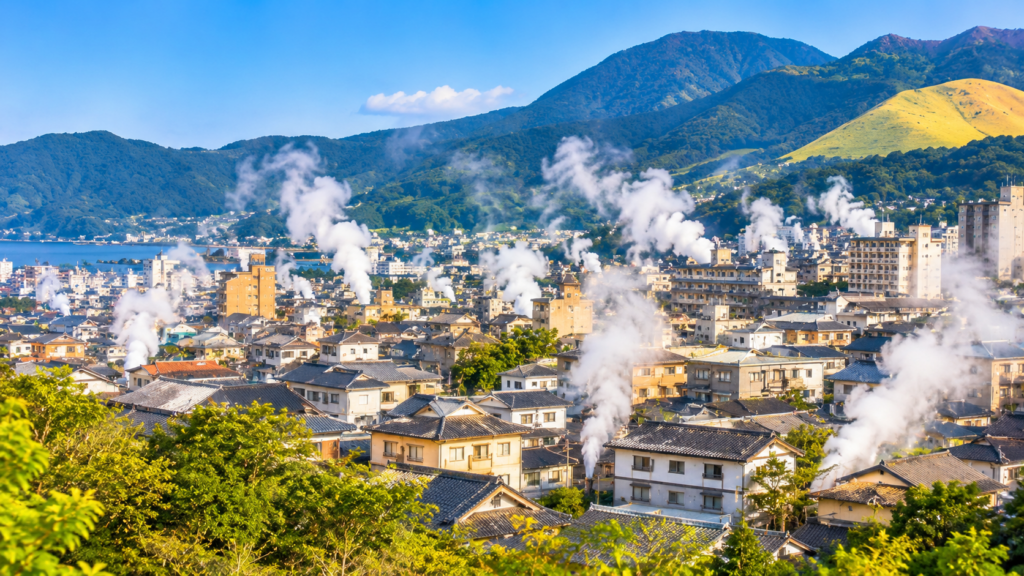
Beppu is one of Japan's best-known hot spring cities, with steam rising from many parts of the urban landscape.
Visitors can discover different types of hot springs and local experiences connected with geothermal energy, including food prepared using natural steam.
One of Beppu's famous attractions is the Jigoku Meguri, or "Hell Tour," featuring unusual hot spring pools with striking colors and geothermal activity.
Important: The sightseeing pools on the Hell Tour are for viewing, not for bathing.
Recommended for: Travelers interested in geothermal landscapes, local food culture, and unusual hot spring attractions.
Official travel information: Visit Oita.
5. Ibusuki Onsen — Kagoshima Prefecture
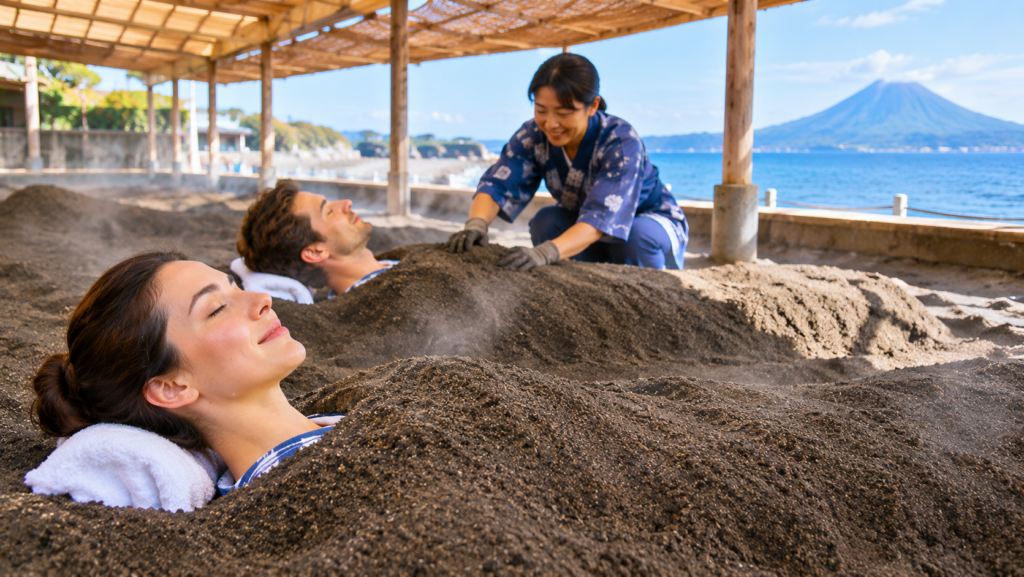
Ibusuki, located in southern Kagoshima Prefecture, offers one of Japan's most unusual hot spring experiences: the sunamushi onsen, or geothermal sand bath.
Instead of soaking in a pool of hot water, guests lie in sand naturally warmed by geothermal heat.
What Is a Sunamushi Sand Bath?
One well-known facility is Sunamushi Kaikan Saraku, a sand bath center in Ibusuki.
After checking in, guests change into the facility's designated yukata and proceed to the sand bathing area.
You lie on your back while trained staff carefully cover your body with warm sand, leaving your face uncovered.
The experience combines warmth with the gentle weight of the sand. A sand bath commonly lasts around 10 minutes, but you should follow staff instructions and leave earlier if you feel uncomfortable.
Afterward, you return to the bathing facilities, remove the yukata, wash away the sand thoroughly, and can enjoy a conventional hot spring bath.
Can Couples Experience the Sand Bath Together?
Unlike a conventional gender-separated public bath, Saraku allows men and women to meet in the sand bathing area after changing into the designated yukata.
This makes it possible for couples or family members to share the sand bath experience, subject to the facility's arrangements.
The conventional bathing and changing areas remain separated by gender.
Important: The sand bath requires the designated yukata. Follow the facility's instructions regarding clothing and any optional approved innerwear.
Before Visiting Ibusuki's Sand Baths
Sand bathing can feel intensely warm and may cause considerable sweating. If you have a medical condition, are pregnant, or are unsure whether heat exposure is suitable for you, consult an appropriate healthcare professional and the facility before participating.
Weather, maintenance, and operational conditions can affect availability. Always check the latest visitor information.
Official English guide: Sunamushi Kaikan Saraku — Sand Bath Experience Guide.
Recommended for: Travelers seeking a truly distinctive Japanese hot spring experience, including couples and families.
9. Practical Tips for Planning an Onsen Visit
Check Towels and Amenities
Some facilities provide towels, shampoo, and body wash, while others require guests to bring or rent certain items. Check before arriving.
Confirm Prices and Opening Hours
Admission prices vary widely between local public baths, day-use hot spring facilities, and luxury ryokan.
Opening hours, cleaning periods, last admission times, and closure dates can change. Use official websites for the latest details.
Check Bathing Hours at Your Ryokan
Some ryokan allow early-morning or late-night bathing, but baths may close temporarily for cleaning. The men's and women's baths may also switch at certain times.
Consider Water Temperature and Your Health
Onsen water temperatures and mineral compositions vary. Avoid prolonged exposure to very hot water, take breaks, and stay hydrated.
People with relevant medical conditions, pregnant travelers, or anyone concerned about their health should check facility warnings and seek medical advice when appropriate.
10. Frequently Asked Questions About Japanese Onsen
Can I Wear a Swimsuit in a Japanese Onsen?
Usually not in traditional gender-separated baths. However, certain spa facilities and mixed-bathing areas have different rules and may require swimsuits.
Can Couples Bathe Together?
Most public baths are gender-separated. Private baths and guest rooms with their own baths may allow couples to bathe together, depending on the facility's rules.
Are Tattoos Allowed?
It depends on the facility. Check for tattoo-friendly options, permitted cover patches, or private baths before visiting.
Do I Need to Shower Before Entering?
Yes. At a typical communal onsen, wash and rinse your body thoroughly before entering the shared bath.
Can I Visit an Onsen Without Staying Overnight?
Yes. Many facilities offer day-use bathing, although availability and admission conditions vary.
Do I Have to Be Naked in an Ibusuki Sand Bath?
No. At Saraku, guests wear the designated yukata during the sand bath. The conventional bathing areas have separate rules.
Final Thoughts: Experience Japan Through Its Hot Springs
Japanese onsen are not simply places to get warm. They are part of a bathing culture built around cleanliness, relaxation, respect for others, and appreciation of nature.
Bathing naked, washing before entering, and following shared-bath etiquette may feel unfamiliar at first. But once you understand the basic rules, enjoying an onsen becomes much easier.
Whether you relax in an open-air bath surrounded by mountains, stroll through a historic hot spring town in a yukata, or experience the warm sands of Ibusuki, each destination offers something different.
Find the onsen experience that suits you, respect the local customs, and discover another unforgettable side of Japan.