What to Buy at Japanese Convenience Stores: 15 Must-Try Foods and Snacks
 komatsuna_admin
Japanese convenience stores, known as konbini, are much more than places to grab a drink or a quick snack. For travelers, they offer an affordable and fascinating introduction to everyday life in Japan.
Step into a 7-Eleven, FamilyMart, or Lawson, and you may discover delicious rice balls, surprisingly good sandwiches, hot fried chicken, creative Japanese sweets, and snacks you have never seen before.
With so many choices, where should you start?
Here are 15 foods and drinks we recommend trying during your trip, plus practical tips for making the most of Japanese convenience stores.
How We Chose Our Top 15
This is an independent editorial recommendation ranking by Japan Insider Guide, not an official sales ranking or a nationwide survey of international visitors.
We evaluated each food and drink using five criteria: Japanese cultural experience and uniqueness (30 points), appeal and convenience for international travelers (25 points), availability at convenience stores (20 points), familiarity and accessibility of flavor (15 points), and visual appeal and conversation value (10 points), for a total of 100 points.
The scores are subjective editorial estimates, not results from consumer testing or a scientific survey. They reflect our judgment about what first-time visitors may most enjoy discovering.
Product selection, ingredients, and availability vary by chain, store, and season.
1. Onigiri — Japanese Rice Balls (96/100)
Best for: A quick breakfast, light lunch, or snack while sightseeing.
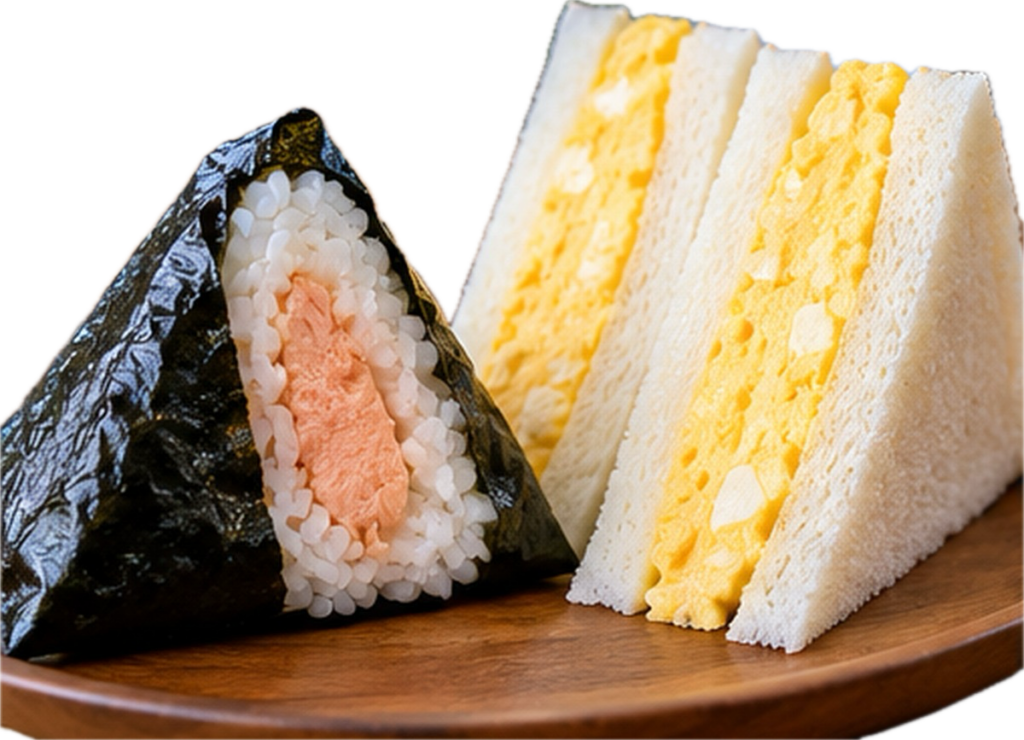
Onigiri are one of the easiest ways to experience everyday Japanese food. These compact rice balls often contain fillings such as tuna mayonnaise, salmon, or pickled plum, and many are wrapped in seaweed.
For beginners, tuna mayonnaise (tsuna mayo) is a particularly approachable choice. Salmon is another classic.
Some packages feature a clever numbered opening system that keeps the seaweed crisp until you are ready to eat. Simply follow the numbers on the wrapper.
Shopping tip: Check the filling before buying, especially if you have food allergies or dietary restrictions.
2. Tamago Sando — Japanese Egg Sandwich (93/100)
Best for: Travelers who want a familiar food with a Japanese twist.
Japanese egg sandwiches combine exceptionally soft white bread with a creamy egg filling.
The mild seasoning and delicate texture make them easy to enjoy, even if you are not feeling adventurous.
They are a wonderful introduction to Japanese convenience store food because something so simple can taste surprisingly different.
Shopping tip: Find them in the refrigerated sandwich section and keep them chilled until you are ready to eat.
3. Japanese Convenience Store Fried Chicken (91/100)
Best for: A warm, savory snack after a long walk.
The hot-food counter near the register is one of the most tempting parts of a Japanese convenience store.
Look for Famichiki at FamilyMart, Karaage-kun at Lawson, or fried chicken products at 7-Eleven.
Each chain offers its own approach to seasoning, texture, and portion size.
These items are generally ordered from the cashier rather than taken from a refrigerated shelf.
Shopping tip: Point to the product and say, “Kore o hitotsu kudasai” (これを一つください) — “One of these, please.”
4. Melon Pan — Japanese Sweet Bread (89/100)
Best for: Breakfast or a sweet afternoon snack.
Despite its name, traditional melon pan does not necessarily taste like melon.
This Japanese sweet bread has a soft interior and a patterned outer crust, often with a lightly crisp, sugary texture.
Its name is commonly associated with its melon-like appearance, although melon-flavored varieties also exist.
Shopping tip: Look in the packaged bread section and check the label if you specifically want a melon-flavored version.
5. Japanese Convenience Store Sweets (88/100)
Best for: Dessert lovers and anyone curious about Japan’s creative everyday treats.
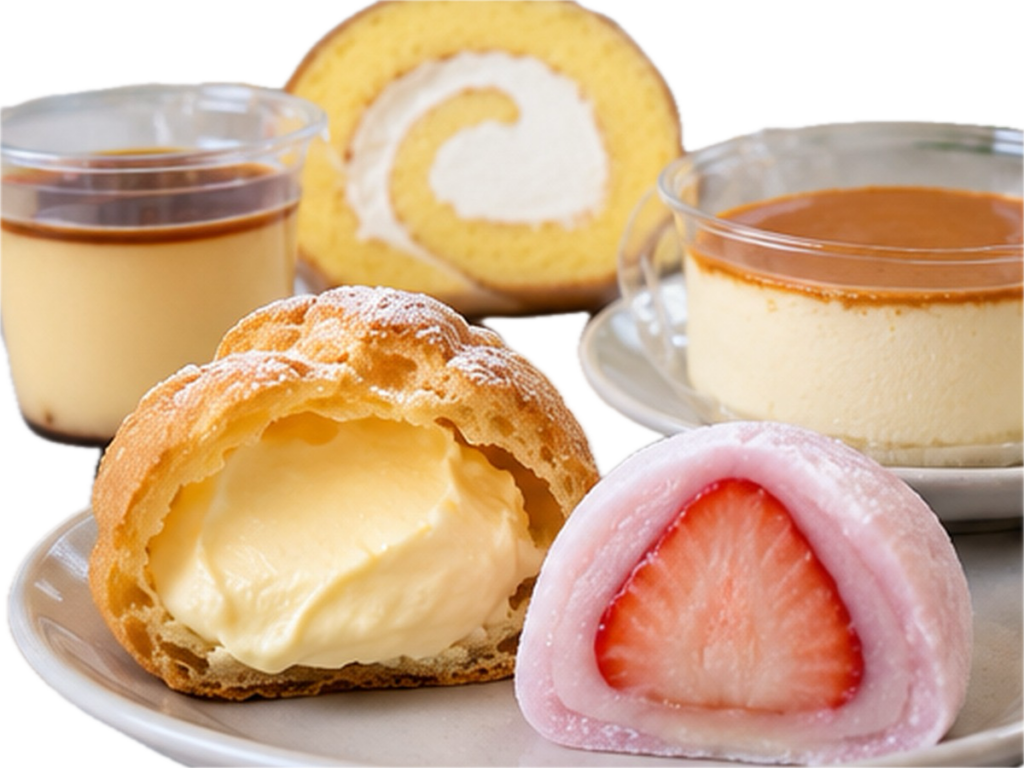
Japanese convenience stores take desserts seriously. Their refrigerated shelves may feature custard pudding (purin), roll cakes, cheesecakes, parfaits, cream-filled treats, and seasonal specialties.
One of the most interesting things is how the major chains develop their own dessert identities.
Lawson is known for its Uchi Café dessert line. FamilyMart offers a changing range of original sweets, while 7-Eleven also develops its own dessert selections.
This competition gives travelers a reason to explore more than one chain. A dessert you find at Lawson may be quite different from what is available at FamilyMart or 7-Eleven.
And these sweets are not just for women. They are everyday treats that people of different ages and genders can enjoy.
Shopping tip: Check the refrigerated dessert section at each chain. Limited-edition items can sell out, and availability changes frequently.
6. Cream Pan — Custard-Filled Bread (85/100)
Best for: Travelers with a sweet tooth.
Cream pan is a soft Japanese bun filled with sweet custard cream.
It is a familiar favorite in Japan and an easy introduction to the country’s extensive selection of sweet breads.
The filling ranges from light custard to richer, dessert-like cream.
Shopping tip: Look in the packaged bread section and check whether your chosen product requires refrigeration.
7. Japanese Cream Puffs — Shu Cream (84/100)
Best for: An affordable and satisfying dessert.
Known in Japan as shu cream, these pastries are filled with custard, whipped cream, or both.
Some have soft pastry shells, while others feature crisp or cookie-like exteriors.
Even if you have tried cream puffs elsewhere, the different textures and fillings available in Japan are worth exploring.
Shopping tip: Most cream-filled versions are refrigerated and should be eaten promptly after purchase.
8. Matcha Ice Cream (83/100)
Best for: Travelers who want to experience the distinctive taste of Japanese green tea.
Matcha ice cream combines sweetness with the earthy, sometimes slightly bitter flavor of powdered green tea.
The intensity varies by product, from mild and creamy to rich and distinctly tea-flavored.
Shopping tip: Look in the freezer section. Check the product name rather than assuming every green-colored dessert contains matcha.
9. Japanese Cup Ramen (82/100)
Best for: A quick meal at your accommodation.
Japan offers an enormous variety of instant noodles, including soy sauce, miso, salt-based, and spicy flavors.
Convenience stores may also stock regional or limited-edition products that are difficult to find overseas.
Shopping tip: Check that you have access to hot water before buying. Some stores provide hot water, but not all do. Follow the instructions and take care when handling boiling water.
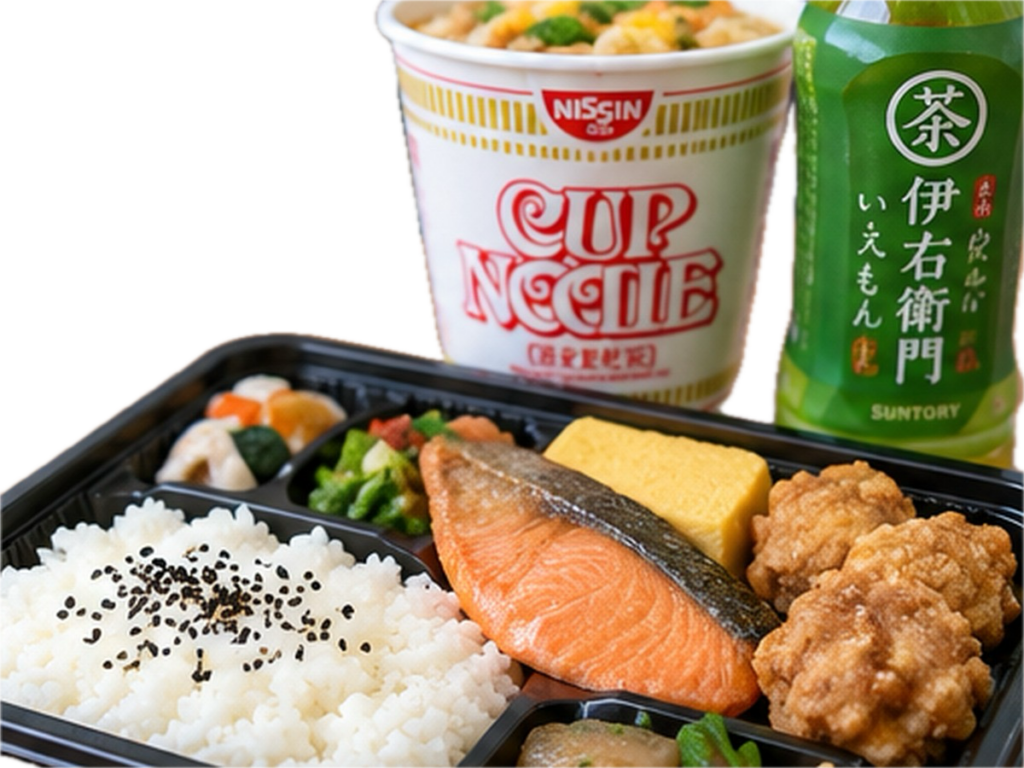
10. Japanese Bento Lunch Boxes (81/100)
Best for: A convenient lunch or dinner.
A convenience store bento is a packaged meal that may combine rice with fish, meat, vegetables, and other side dishes.
Choices can include grilled salmon, fried chicken, hamburger steak, and Japanese-style mixed meals.
For travelers, bento is an easy way to sample everyday Japanese meals without visiting a restaurant.
Shopping tip: Ask whether your bento can be heated. Some meals are intended to be eaten cold, and heating arrangements vary by store.
11. Oden — Japanese Simmered Foods (79/100)
Best for: A warming snack during cooler weather.
Oden is a traditional dish made by simmering ingredients in a light, savory broth.
Typical ingredients include daikon radish, boiled eggs, konjac, and fish cakes.
It offers an opportunity to try flavors and textures that may be unfamiliar to first-time visitors.
Shopping tip: Oden is seasonal or unavailable at many convenience stores. If you cannot find it, try a supermarket or a restaurant that serves it.
12. Daifuku and Mochi Sweets (78/100)
Best for: Travelers interested in traditional Japanese textures.
Daifuku is a soft, chewy sweet made with mochi and filled with ingredients such as sweet red bean paste, cream, or fruit.
Convenience stores sometimes offer modern versions featuring matcha or seasonal flavors.
The chewy texture makes these sweets particularly memorable.
Shopping tip: Mochi can be sticky and difficult to swallow. Take small bites and chew thoroughly, especially when serving it to children or older adults.
13. Senbei — Japanese Rice Crackers (77/100)
Best for: A savory snack or an easy souvenir.
Senbei are Japanese rice crackers available in many shapes, textures, and flavors.
Common varieties include soy sauce, seaweed, and salt-seasoned crackers.
Individually wrapped packages are convenient for sharing.
Shopping tip: Some products contain seafood ingredients or other allergens. Check the packaging if you have dietary restrictions.
14. Japanese Green Tea and Hojicha (76/100)
Best for: Refreshment without a sugary soft drink.
Unsweetened bottled tea is widely available in Japanese convenience stores.
Green tea (ryokucha) has a fresh, sometimes pleasantly bitter taste. Roasted green tea (hojicha) offers a deeper, toasted aroma.
If you are accustomed to sweetened bottled tea, Japan’s unsweetened varieties may be a pleasant surprise.
Shopping tip: Look for 無糖 (mutō), meaning “unsweetened,” on the label.
15. Japanese Fruit Sandwiches (73/100)
Best for: A colorful dessert or a memorable food photo.
Fruit sandwiches combine soft white bread, whipped cream, and fresh fruit such as strawberries or seasonal varieties.
The result is closer to a light dessert than a savory sandwich.
Their colorful cross-sections make them especially photogenic.
Shopping tip: Availability varies considerably. You may have better luck at larger stores, specialty shops, or department store food halls.
More Than Just Food: Useful Convenience Store Services
Japanese convenience stores are not only about food. They can also help with practical needs during your trip.
Can You Use the Toilet at a Japanese Convenience Store?
Sometimes, yes — but not at every store.
Some convenience stores offer restrooms for customers, while others do not. Access may depend on the location, building, time of day, or store policy.
Follow posted signs and ask a staff member before using the facilities when required.
A useful phrase is:
“Toire o karite mo ii desu ka?” (トイレを借りてもいいですか?)
This means, “May I use the restroom?”
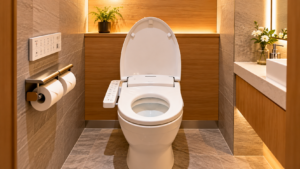
For more advice about Japanese toilets, bidet controls, and restroom etiquette, see our guide:
How to Use Japanese Toilets: A Complete Guide for First-Time Visitors
Do Japanese Convenience Stores Have ATMs?
Many do, but not all.
ATMs are common at major Japanese convenience store chains, particularly in cities and tourist areas.
However, not every store has one, and not every ATM accepts every foreign-issued card.
Look for supported card-network logos and check withdrawal limits, fees, and operating hours.
If your card does not work at one ATM, another ATM network may support it.
Travel tip: Check the ATM operator’s official website and your card issuer’s international withdrawal rules before relying on a particular machine.
Practical Tips for Shopping at a Japanese Konbini
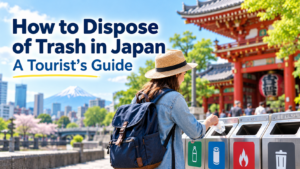
Wondering where to throw away your food packaging after enjoying your konbini snacks? Read our guide: How to Dispose of Trash in Japan: A Tourist’s Guide.
Can You Eat Inside the Store?
Some convenience stores have designated eat-in areas, but many do not.
If no seating is provided, take your food to an appropriate place. Avoid blocking entrances or pedestrian traffic.
Can You Ask Staff to Heat Your Food?
Often, yes.
Many stores can heat suitable packaged meals in a microwave, although eligible products and services vary.
You can say:
“Atatamete kudasai.” (温めてください。)
This means, “Please heat it up.”
Do Convenience Stores Provide Chopsticks, Forks, and Spoons?
Often, yes — but don’t assume they will be included automatically.
When buying a bento, cup noodles, pasta, or dessert, the cashier may ask whether you need chopsticks, a fork, or a spoon.
You might hear:
- “Ohashi wa irimasu ka?” (お箸はいりますか?) — “Do you need chopsticks?”
- “Fōku wa irimasu ka?” (フォークはいりますか?) — “Do you need a fork?”
- “Supūn wa irimasu ka?” (スプーンはいりますか?) — “Do you need a spoon?”
If you need one, you can simply say:
“Hai, onegaishimasu.” (はい、お願いします。) — “Yes, please.”
If you don’t need one:
“Iie, daijōbu desu.” (いいえ、大丈夫です。) — “No, thank you.”
Travel tip: Utensils may be provided free of charge at many stores, but availability and store policies vary. Check before leaving, especially if you plan to eat your meal at a hotel or on the go.
Can You Pay by Credit Card?
Major convenience store chains generally accept a variety of payment methods, including credit cards, but accepted brands and services vary.
It is sensible to carry an alternative payment method.
Want to know when to use cash, credit cards, or IC cards while shopping in Japan? See our complete guide to payment methods in Japan, including ATM tips for international visitors.
Are Plastic Shopping Bags Free?
Usually not. Plastic shopping bags at Japanese convenience stores generally cost a small additional fee.
Cashiers may ask whether you need a bag, so do not assume one will be provided automatically.
You can say:
“Fukuro wa irimasen.” (袋はいりません。) — “I don’t need a bag.”
Or:
“Fukuro o kudasai.” (袋をください。) — “A bag, please.”
Travel tip: Carry a small reusable shopping bag. It saves money, reduces plastic waste, and comes in handy when buying snacks and souvenirs.
Where Can You Throw Away Trash in Japan?
Public trash cans can be surprisingly difficult to find in Japan, even in busy tourist areas.
Some convenience stores have trash bins, but they are not always available for general public use. Many stores restrict their bins to waste from products purchased at that store, and some do not provide customer trash bins at all.
Never leave trash on the street, beside a full trash bin, or outside a convenience store.
If you have trash from somewhere else, ask a staff member before using the store’s bins.
You can say:
“Kono gomi o sutete mo ii desu ka?” (このゴミを捨ててもいいですか?) — “May I throw this trash away here?”
If the answer is no, please respect the store’s policy.
Travel tip: Carry a small bag for your trash until you find an appropriate disposal point. Use convenience store bins only when permitted, and follow any sorting instructions.
What If You Have Food Allergies or Dietary Restrictions?
Do not rely on appearance alone.
Packaged foods may contain wheat, eggs, milk, soy, fish, shellfish, or other allergens. English ingredient information is not always available.
If you have a serious allergy, verify the ingredients before eating. Travelers with vegetarian, vegan, halal, or other dietary requirements should also check carefully.
Final Thoughts: Discover Japan One Convenience Store at a Time
You do not need an expensive restaurant reservation to discover something delicious in Japan.
A simple onigiri, a creamy egg sandwich, or a piece of freshly prepared fried chicken can become one of the small pleasures you remember from your trip.
Start with a few items from our list, try something unfamiliar, and explore the shelves at your own pace.
Japanese convenience stores are not just convenient. They offer a window into everyday Japanese life.
Which Japanese convenience store food would you try first?