Japanese Nightlife Explained: Bars, Hostess Clubs, Girls Bars & Soaplands
 komatsuna_admin
Japan has one of the most varied nightlife cultures in the world. From casual izakaya and cocktail bars to snack bars, girls bars, hostess clubs, host clubs, and soaplands, visitors may encounter types of establishments that are unfamiliar outside Japan.
But these venues are not interchangeable. Some focus on food and drinks, others on conversation and personal hospitality, while certain adult-oriented establishments operate under a different category of Japanese law.
Prices can also be confusing. In addition to drinks, some venues charge cover fees, timed set fees, staff drink fees, nomination fees, or service charges.
This Japanese nightlife guide explains the main differences, how pricing works, what foreign visitors should check before entering, and how to avoid common problems.
Important: This article is an informational guide, not a recommendation or endorsement of any particular establishment. Services, admission policies, and prices vary by venue.
1. Japanese Nightlife at a Glance: Comparing Venue Types
The easiest way to understand Japanese nightlife is to start with what each type of venue actually offers.
| Venue Type | Main Experience | Typical Pricing Structure |
|---|---|---|
| Izakaya | Food, drinks, and socializing | Food and drinks; sometimes an otoshi charge |
| Regular Bar | Cocktails, spirits, music, and conversation | Drinks; sometimes a cover or table charge |
| Snack Bar | Conversation with the owner or staff, karaoke | Set fees, drinks, and sometimes bottle keeping |
| Girls Bar | Conversation with female staff, usually across a counter | Timed fees, drinks, and staff drinks |
| Hostess Club / Kyabakura | Table-side hospitality and conversation with female staff | Set fees, nomination fees, drinks, and service charges |
| Host Club | Hospitality and conversation with male hosts | Set fees, nomination fees, and bottle orders |
| Soapland | Adult-oriented private bathing services | Course-based or time-based fees |
Japanese law distinguishes between certain entertainment and hospitality businesses and businesses classified as sex-related special establishments. A venue's advertised name alone does not establish its legal status.
2. Izakaya, Regular Bars, and Snack Bars
Izakaya: Casual Japanese Drinking and Dining
An izakaya is a Japanese-style drinking and dining establishment. Customers typically enjoy beer, sake, shochu, and a variety of small dishes such as yakitori, sashimi, and fried foods.
Izakaya are popular places for friends and coworkers to socialize, and they are often an accessible introduction to Japanese nightlife for international travelers.
One thing to know is otoshi, a small appetizer that may be served automatically and charged to your bill. The practice and amount vary by establishment.
Want to experience a Japanese izakaya like a local? Read our Japanese Izakaya Guide: How to Order, Pay & Enjoy Like a Local for practical tips on ordering food and drinks, understanding charges, and paying your bill.
Regular Bars: Drinks, Atmosphere, and Conversation
Japanese bars range from hotel cocktail lounges and traditional whisky bars to jazz bars and casual standing bars.
Some charge only for drinks, while others add a cover charge or seating fee. Always check the menu if the pricing is unclear.
Ordinary conversation with a bartender should not be confused with the specialized hospitality offered at hostess clubs or host clubs.
Snack Bars: A Distinctive Japanese Social Experience
A Japanese snack bar, often simply called a snack, is usually a small establishment centered on conversation, karaoke, and a familiar social atmosphere.
Many are run by an owner known as the mama, who welcomes customers and helps create a relaxed environment. Regular customers may know each other, and some venues use set fees or bottle-keeping systems.
Despite the name, a snack bar is not necessarily a place offering sexual services. Its main appeal is often the conversation and community atmosphere.
For first-time foreign visitors, language barriers and unfamiliar pricing may be bigger challenges than the venue itself.
3. What Is a Girls Bar in Japan?
A girls bar is generally a drinking establishment where female staff serve beverages and talk with customers, commonly from behind a counter.
This counter-based arrangement is one of the commonly described differences between girls bars and kyabakura, where hostesses typically provide table-side hospitality.
However, the term "girls bar" is a commercial label rather than a guarantee of any particular legal classification. The actual services and operating practices matter.
How Girls Bar Pricing Works
Common charges may include:
- Set fee: A charge covering a specified period.
- Extension fee: An additional charge if you stay longer.
- Staff drinks: Drinks purchased for staff members.
- Tax and service charges: Additional amounts that may apply depending on the venue.
A low advertised entry price does not necessarily represent your final bill. Ask whether the set renews automatically, how much extra time costs, and whether staff drinks are included.
4. Hostess Clubs and Kyabakura: Table-Side Hospitality
A kyabakura is a Japanese hostess club where female staff members typically sit with customers, engage in conversation, and provide hospitality in a drinking establishment.
Other hostess clubs may offer a more formal or upscale atmosphere. Some high-end clubs place greater emphasis on introductions, reservations, and established customer relationships.
The main experience is conversation and hospitality. A hostess club is not the same type of establishment as a venue offering adult sexual services.
Common Kyabakura Pricing Terms
| Japanese Term | Meaning |
|---|---|
| Setto ryokin (セット料金) | Basic charge for a specified period |
| Shimei-ryo (指名料) | Fee for requesting a particular hostess |
| Jonai shimei (場内指名) | Choosing a hostess after entering |
| Encho-ryo (延長料金) | Extension fee |
| Cast drink (キャストドリンク) | Drink purchased for a hostess |
| Service charge (サービス料) | Additional service fee |
Some establishments advertise special first-visit rates, but nominations, additional drinks, extensions, and service charges may cost extra.
Before entering, ask for the total expected price rather than relying only on the advertised set fee.
5. Host Clubs: Hospitality from Male Hosts
Host clubs are establishments where male hosts provide conversation, drinks, and personalized hospitality to customers.
They share some pricing features with hostess clubs, but have their own customer culture, service styles, and promotional practices. Selecting a particular host and ordering bottles may play a significant role in the experience.
What First-Time Visitors Should Know
Some host clubs advertise discounted first-visit packages. These offers do not necessarily reflect the cost of subsequent visits or additional purchases.
Confirm the price of bottles, nominations, extensions, and other services before ordering. Avoid spending beyond a budget you have decided in advance.
It is also important to distinguish professional hospitality from a personal romantic relationship. Friendly or attentive service should not be interpreted as a promise of a relationship outside the venue.
Japan has strengthened regulations addressing abusive practices in certain hospitality businesses, including host clubs. The National Police Agency provides information on measures against malicious host club practices.
Official reference: National Police Agency — Measures Against Malicious Host Clubs (Japanese)
6. What Is a Soapland in Japan?
A soapland is a type of adult-oriented establishment in Japan associated with private bathing facilities and intimate, body-contact services for adult customers.
Unlike ordinary bars, girls bars, or hostess clubs, soaplands fall within a different category of regulated business under Japanese law relating to sex-related special establishments.
Soaplands vs. Hostess Clubs
Hostess clubs primarily provide conversation, drinks, and table-side hospitality. Soaplands are adult-oriented private bathing establishments, with different services, pricing arrangements, and operating rules.
These categories should not be treated as interchangeable, and visitors should not assume that any particular service is available or legally permitted simply because of a venue's name.
Soapland Prices and Admission Policies
Soapland pricing varies by establishment, course, and duration. Visitors should confirm what is included in the advertised price, whether additional fees apply, and the venue's cancellation and payment policies.
Age verification, language support, reservations, and admission requirements also vary. Not every establishment offers English-language assistance or accepts international visitors under the same conditions.
If the rules, services, or total price cannot be understood clearly, it is sensible not to proceed.
Whatever the venue, respect staff members' boundaries, privacy, consent, and the establishment's rules. Do not assume that an advertised service permits conduct outside those boundaries.
7. Understanding Japanese Nightlife Prices and Extra Charges
One of the most important things foreign visitors should understand is that the displayed entry price may not be the final amount charged.
Depending on the establishment, your bill may include several separate items.
| Charge | What It Means |
|---|---|
| Cover / Table Charge | Fee for occupying a seat or entering the venue |
| Set Fee | Base charge for a fixed period |
| Extension Fee | Additional time charge |
| Nomination Fee | Charge for requesting a particular staff member |
| Staff Drink | Drink purchased for a staff member |
| Bottle Charge | Charge for ordering a bottle |
| Service Charge | Additional fee set by the establishment |
| Tax | Applicable tax, depending on how prices are displayed |
Example: How a Nightlife Bill Can Add Up
Consider the following hypothetical example. These amounts are for illustration only and do not represent actual market prices.
| 60-minute set fee | ¥5,000 |
| Two staff drinks | ¥3,000 |
| Nomination fee | ¥2,000 |
| Subtotal | ¥10,000 |
| Illustrative 10% service charge | ¥1,000 |
| Total before any separately applicable tax | ¥11,000 |
The lesson is simple: understand every charge before ordering or agreeing to an extension.
Five Useful Questions to Ask Before Entering
- "What is the total price, including tax and service charges?"
- "Is there a cover charge?"
- "How long is one set?"
- "Does the time extend automatically?"
- "Are staff drinks charged separately?"
If the staff cannot explain the charges clearly, consider choosing another establishment.
8. Can Foreign Tourists Visit Japanese Nightlife Venues?
Whether a venue accepts international tourists depends on its individual admission policies, services, and ability to communicate with customers.
Many ordinary bars and izakaya welcome overseas visitors, and some offer English menus or multilingual staff.
At snack bars, hostess clubs, host clubs, and adult-oriented establishments, communication may be a more important part of the experience. Some venues may require reservations or may not be able to explain their services in English.
What to Confirm Before Visiting
- Whether the establishment accepts international visitors.
- Whether English or another language is supported.
- Whether reservations are required.
- Age restrictions and acceptable identification.
- Payment methods and total expected charges.
- Cancellation, extension, and other house rules.
Japan's legal drinking age is 20. Entry restrictions can be different from the drinking age and may depend on the type of business, applicable law, and venue rules.
Do not assume that all establishments have the same policy toward foreign visitors. Check the specific venue's official information rather than relying entirely on online reviews.
9. Nightlife Safety in Japan: Touts, Overcharging, and Etiquette
Japan has many enjoyable nightlife districts, but visitors should still be cautious about street solicitation, misleading prices, and other scams.
The Tokyo Metropolitan Police Department specifically warns international visitors about street touts who lead customers to bars where they may face excessive bills or unauthorized credit card charges.
Do Not Follow Street Touts
Be cautious if someone approaches you on the street offering cheap drinks, special deals, or an exclusive nightlife experience.
Avoid entering an unfamiliar venue solely because a stranger promises a low price. Check the venue's name, location, menu, and reviews independently.
Check All-You-Can-Drink Conditions
An all-you-can-drink package may cover only certain drinks and may not include beverages ordered for hosts or hostesses.
Ask exactly what the package includes before placing an order.
Respect Consent and Privacy
Do not touch staff members without consent, take photographs without permission, or pressure anyone to share private contact information.
Always follow the venue's rules about photography, personal space, and acceptable behavior.
What to Do If Something Goes Wrong
For emergencies involving crime or immediate danger in Japan, call 110 for the police.
For non-emergency police consultations, #9110 is also available. If you need help in person, visit a nearby police box, known as a koban.
Official English guidance: Tokyo Metropolitan Police Department — For Visitors to Tokyo
Official English warning: Crimes Against Foreigners in Entertainment and Nightlife Districts
10. Frequently Asked Questions About Japanese Nightlife
Are girls bars and hostess clubs the same thing?
No. Girls bars are commonly associated with counter-based service, while hostess clubs and kyabakura typically offer table-side hospitality. However, actual operating practices determine the relevant legal classification.
Do hostess clubs and host clubs provide sexual services?
Their primary business is hospitality, conversation, and drinking entertainment. They should not be confused with establishments specifically categorized as adult-oriented or sex-related businesses.
Are soaplands regulated in the same way as ordinary bars?
No. Japanese law distinguishes between various entertainment businesses and sex-related special establishments, including certain private bathing businesses.
Can I visit these venues without speaking Japanese?
It depends on the establishment. Some offer English-language support, while others primarily serve Japanese-speaking customers. Confirm language support and admission conditions before visiting.
Do I need to tip at Japanese nightlife venues?
Tipping is not generally customary in Japan. However, cover charges, service fees, nomination fees, and staff drinks may be charged separately. These are not the same as voluntary tips.
What is the best Japanese nightlife experience for first-time visitors?
If you simply want to enjoy Japan's nightlife culture, an izakaya or a regular bar with clearly displayed prices and accessible language support is often a good starting point.
For more specialized venues, make sure you understand the services, fees, and house rules before entering.
Official Sources and Further Reading
For additional information about safety and the legal framework surrounding nightlife establishments in Japan, consult these official resources:
- Tokyo Metropolitan Police Department — For Visitors to Tokyo (English)
- Tokyo Metropolitan Police Department — Crimes Against Foreigners in Nightlife Districts (English)
- National Police Agency — Measures Against Malicious Host Clubs (Japanese)
- e-Gov Japan — Act on Control and Improvement of Amusement Business, etc. (Japanese)
Conclusion: Enjoy Japanese Nightlife with the Right Expectations
Japanese nightlife includes everything from casual izakaya and cocktail bars to snack bars, girls bars, hostess clubs, host clubs, and adult-oriented establishments such as soaplands.
But each type of venue offers a different experience, and prices, admission policies, and operating rules can vary considerably.
For international visitors, the most important steps are to understand the type of service, confirm the total cost, check admission requirements, and avoid street touts.
With the right information and respect for local rules and personal boundaries, you can make better decisions about how to experience Japan after dark.
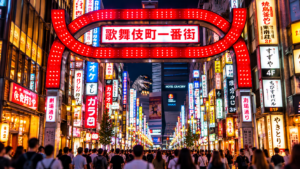
Want to see what a famous Tokyo nightlife district is like in person? Explore our Kabukicho Nightlife Guide for First-Time Visitors: What to Expect for a beginner-friendly walking route, major landmarks, and advice on visiting the area safely.