Kabukicho Nightlife Guide for First-Time Visitors: What to Expect
 komatsuna_admin
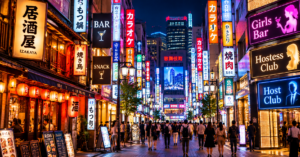
Kabukicho, located in Shinjuku, Tokyo, is one of Japan's most famous entertainment districts.
Colorful neon signs, late-night restaurants, karaoke venues, bars, nightclubs, and uniquely Japanese hostess and host clubs are all part of its nightlife scene.
For international visitors, Kabukicho offers a fascinating opportunity to experience Tokyo's nightlife culture up close.
However, first-time visitors may have questions. Where should you walk? What kinds of establishments are there? How is Golden Gai different? How should you respond to street touts? And how can you return to your hotel late at night?
This guide introduces a practical walking route, major attractions, nightlife options, pricing precautions, and essential safety advice for first-time visitors to Kabukicho.
You do not need to visit a nightclub or an expensive entertainment venue to enjoy Kabukicho.
Simply walking through the streets, taking photographs, and enjoying a meal can give you a memorable taste of Tokyo after dark.
1. Where Is Kabukicho? Getting There from Shinjuku Station
Kabukicho is located in Shinjuku Ward, Tokyo, northeast of JR Shinjuku Station.
For first-time visitors, the easiest starting point is usually the East Exit of JR Shinjuku Station.
From the East Exit, it takes approximately 5–10 minutes to walk to one of Kabukicho's main entrances. Shinjuku Station is enormous, so choosing the wrong exit can add considerable walking time. Check your destination on a map before leaving the station.
Several stations provide access to Kabukicho:
- Shinjuku Station: JR, Tokyo Metro, Odakyu, Keio, and other railway services
- Seibu-Shinjuku Station: Seibu Shinjuku Line
- Shinjuku-sanchome Station: Tokyo Metro Marunouchi and Fukutoshin lines, and Toei Shinjuku Line
- Higashi-shinjuku Station: Toei Oedo Line and Tokyo Metro Fukutoshin Line
If you are visiting Kabukicho for sightseeing, walking from Shinjuku Station's East Exit is a good choice.
As you approach the district, the streets gradually become brighter with neon signs, offering an introduction to the atmosphere of Kabukicho.
2. A Recommended Kabukicho Walking Route for First-Time Visitors
Kabukicho has many narrow side streets, but first-time visitors do not need to explore every back alley.
Start with busy streets and easily recognizable landmarks.
Recommended walking time: approximately 45–60 minutes, including photographs and short stops.
- JR Shinjuku Station – East Exit
- Kabukicho Ichibangai Entrance Arch
- Godzilla Head and TOHO Cinemas Shinjuku
- Tokyu Kabukicho Tower
- Shinjuku Golden Gai
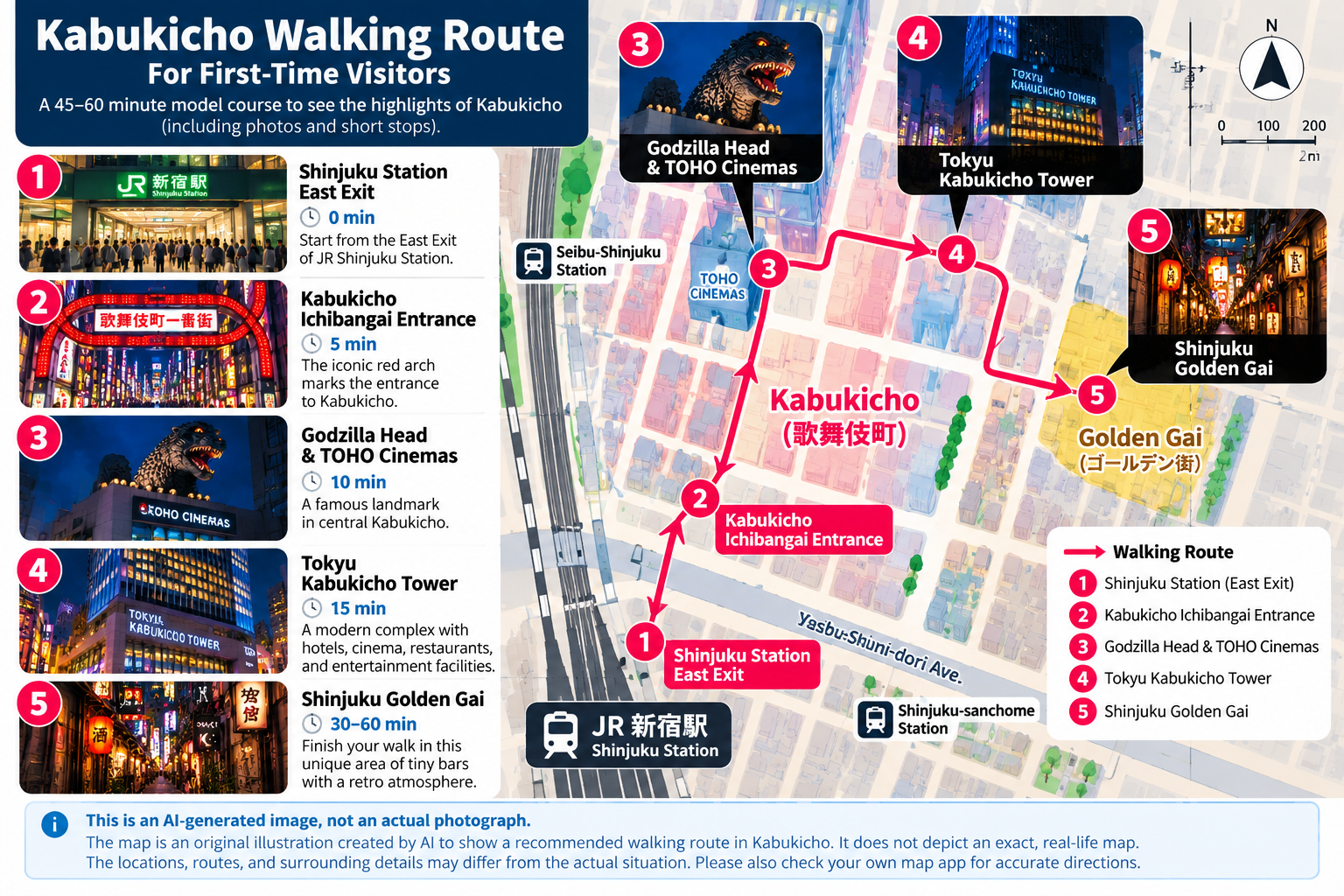
This route allows you to see several of Kabukicho's best-known sights before finishing in the distinctive atmosphere of Golden Gai.
If you plan to stop at restaurants or bars, allow an additional one to two hours.
3. Top Places to See in Kabukicho
3.1 Kabukicho Ichibangai Entrance Arch
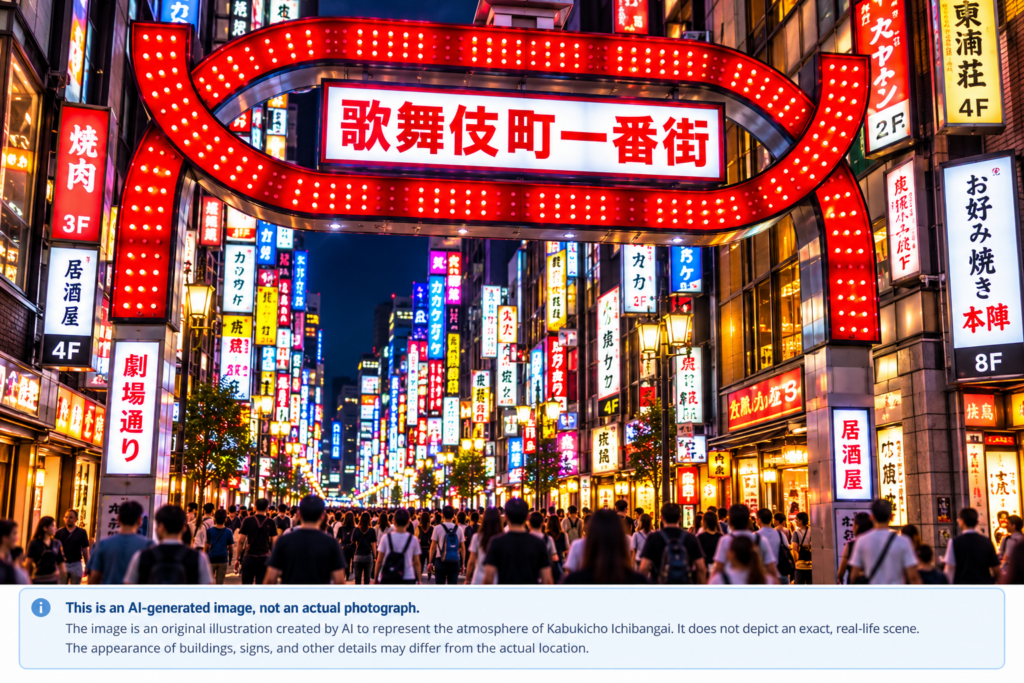
One of Kabukicho's most recognizable landmarks is the red entrance arch displaying the Japanese characters for "Kabukicho Ichibangai."
Surrounded by neon signs, the entrance captures the atmosphere of Tokyo's famous entertainment district.
Many visitors take photographs here to remember their first visit to Kabukicho.
However, avoid blocking the street for extended photo sessions or photographing strangers' faces closely without permission.
3.2 Godzilla Head and TOHO Cinemas Shinjuku
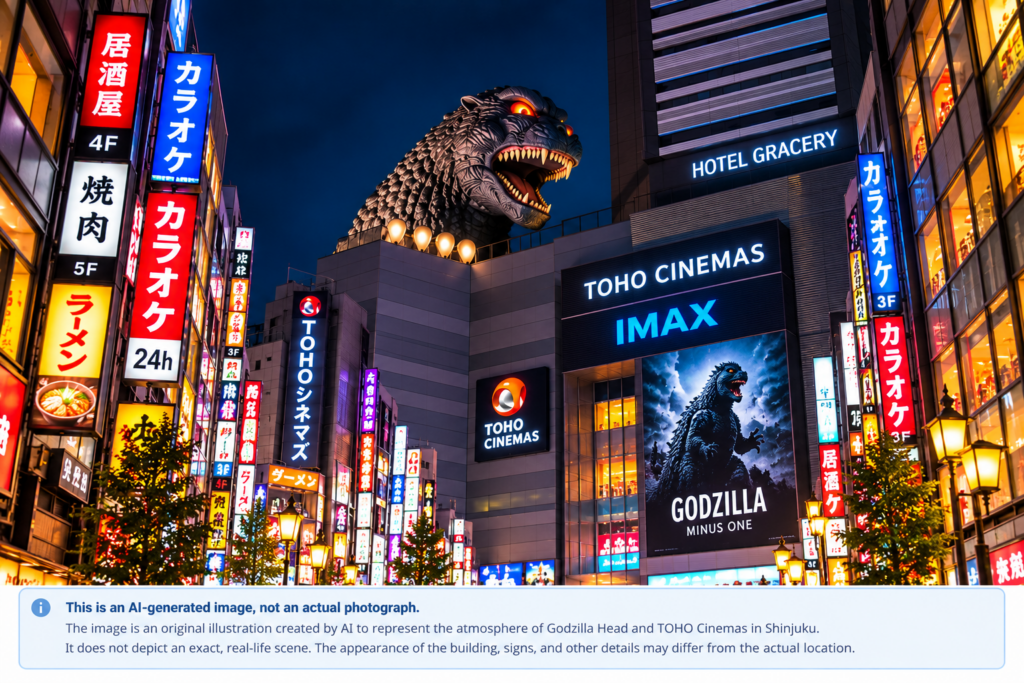
One of the most memorable sights in central Kabukicho is the enormous Godzilla head overlooking the street.
It is installed on the building housing TOHO Cinemas Shinjuku and Hotel Gracery Shinjuku, and you can enjoy the view simply by looking up from the street.
Even if you are not a movie fan, seeing Godzilla towering above Kabukicho's neon lights is an impressive experience.
Access conditions for areas closer to the Godzilla head may change. For ordinary sightseeing, viewing it from street level is the most straightforward option.
3.3 Tokyu Kabukicho Tower
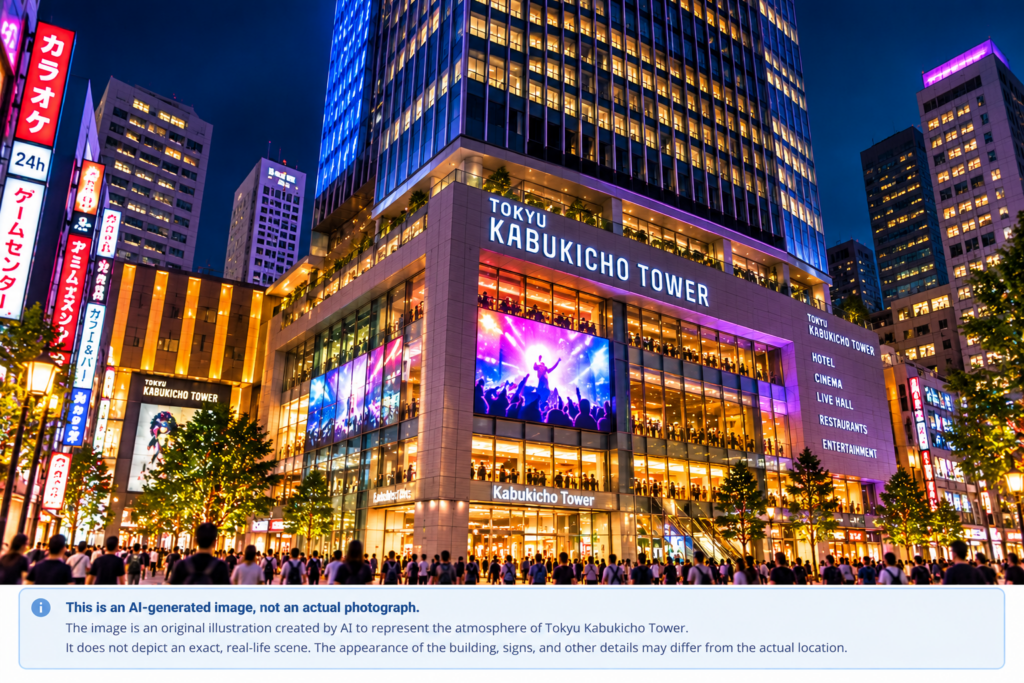
Tokyu Kabukicho Tower is one of the district's newer landmarks.
This high-rise complex includes hotels, a cinema, entertainment facilities, and dining areas, offering a more modern side of Kabukicho nightlife.
The surrounding area also offers opportunities to admire the building's architecture and take photographs without entering any of its facilities.
Opening hours, age restrictions, and admission conditions vary by facility, so check official information before visiting.
4. Kabukicho vs. Golden Gai: What's the Difference?
Some first-time visitors assume that Kabukicho and Golden Gai are the same place.
In fact, Golden Gai is a small bar district on the eastern side of Kabukicho, with a very different atmosphere and style of entertainment.
Kabukicho
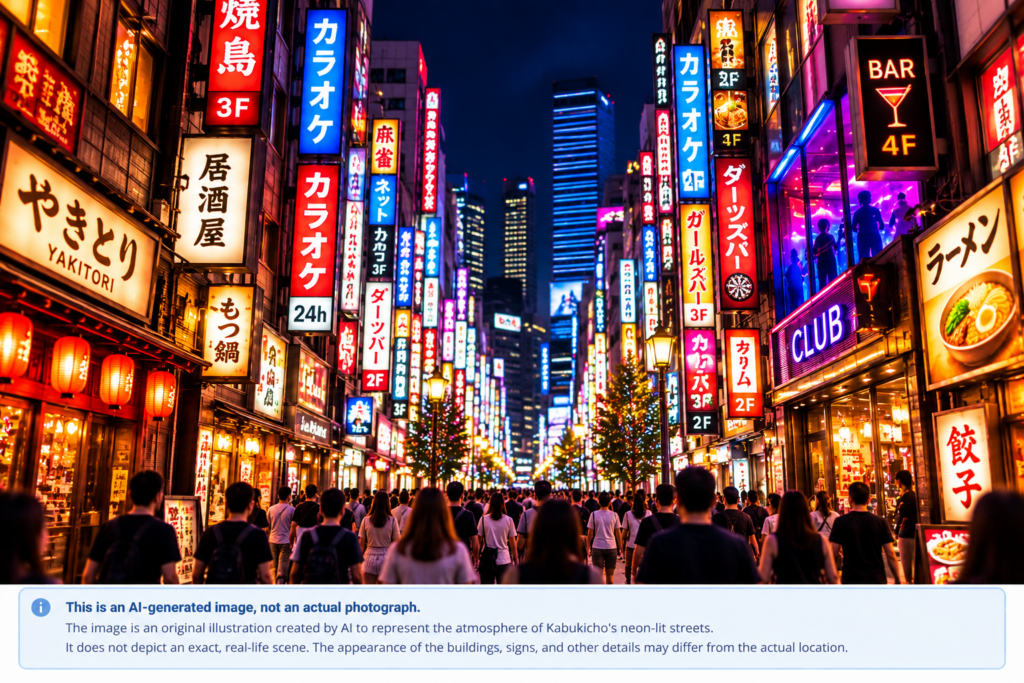
A large entertainment district featuring restaurants, karaoke venues, nightclubs, cinemas, and establishments offering personalized hospitality and entertainment services.
Golden Gai
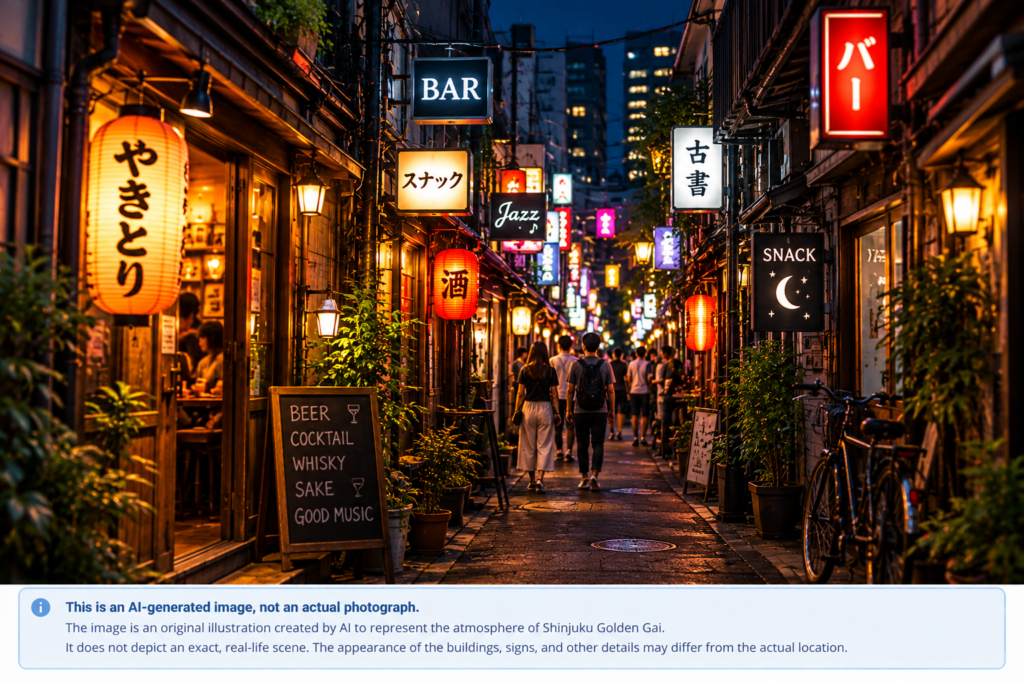
A compact area of narrow alleys filled with tiny bars, known for its retro atmosphere.
Kabukicho offers large neon signs and a wide variety of entertainment options.
Golden Gai, on the other hand, is better known for intimate drinking experiences, where guests may chat with bartenders and other customers in small establishments.
Many Golden Gai bars have only a handful of seats, and some charge a seating or cover fee. Certain establishments mainly serve regular customers, while others may have limited foreign-language support.
Although some bars welcome international visitors, not every establishment is designed for tourists.
For your first visit, look for bars displaying English menus or clear pricing information, and confirm the charges before entering.
5. What Can You Do in Kabukicho? Types of Nightlife
Kabukicho offers everything from casual dining and entertainment to establishments featuring distinctive Japanese hospitality traditions.
5.1 Restaurants, Izakaya, and Ramen Shops
Dining is one of the easiest ways to enjoy Kabukicho.
The district and surrounding streets have izakaya pubs, yakiniku restaurants, ramen shops, sushi restaurants, and fast-food outlets.
Some establishments stay open late, making them convenient places to eat or take a break during an evening walk.
Opening hours vary, however. Always confirm whether a restaurant is operating, especially late at night or early in the morning.
5.2 Karaoke
In Japan, karaoke usually involves renting a private room where friends or family members sing together.
There are karaoke establishments around Kabukicho, and some offer English-language songs.
Prices vary depending on the time of day, number of guests, length of the session, and drink orders.
Late-night rates may be higher than daytime rates, so confirm the total price at reception.
5.3 Bars and Nightclubs
Kabukicho has everything from casual bars to nightclubs featuring music and dancing.
Depending on the venue, admission fees, drink charges, identification checks, and dress codes may apply.
The legal drinking age in Japan is 20.
You may be asked to show your passport or another accepted form of identification to verify your age. Check the venue's rules before visiting.
5.4 Host Clubs and Hostess Clubs
Kabukicho is also known for entertainment establishments featuring distinctive Japanese styles of personalized hospitality.
Host clubs generally feature male hosts who entertain customers, while hostess clubs, including establishments commonly known as cabakura, generally feature female hostesses.
Unlike ordinary bars, these venues may have complex pricing systems involving service charges, designated staff members, time-based fees, and drink orders.
Even when a special introductory price is advertised, it may not include every expense.
International visitors should confirm language support, admission conditions, pricing, and payment methods before entering.
If you cannot fully understand the prices or services being offered, it is better not to enter.
5.5 Adult-Oriented Nightlife Establishments
Kabukicho also has adult-oriented establishments, but not all accept international visitors.
Age restrictions, admission conditions, language support, pricing systems, and available services differ between establishments.
Japanese laws and business regulations also place restrictions on certain services.
Avoid choosing establishments based solely on claims made by street touts. If you are considering visiting one, check its official information and rules beforehand.
There is absolutely no need to visit an adult-oriented establishment to enjoy sightseeing in Kabukicho.
To understand the differences between Japan's nightlife venues, see our guide: Japanese Nightlife Explained: Bars, Hostess Clubs, Girls Bars & Soaplands.
6. Avoid Street Touts: One of Kabukicho's Most Important Safety Rules
One of the most important precautions for first-time visitors is avoiding street touts.
Someone may approach you on the street offering a cheap bar, a foreigner-friendly establishment, or a special deal.
However, following such invitations can lead to unexpected charges or being taken to a venue you did not intend to visit.
Local authorities have introduced regulations and warnings concerning aggressive street solicitation in Kabukicho.
The simplest precaution is to never follow someone who approaches you on the street to promote a bar or entertainment venue.
Even if someone speaks to you in English, you do not need to stop and listen.
A brief "No, thank you" followed by continuing on your way is enough.
If someone becomes persistent, move toward a busy public area or an open business where you can seek assistance.
7. Prices and Rules to Check Before Entering a Venue
Pricing systems vary considerably between establishments in Kabukicho.
Ordinary restaurants and chain businesses often display relatively straightforward prices. Smaller bars and entertainment venues, however, may charge additional fees.
Before entering, check the following:
- Admission fees and cover charges
- Time-based rates and extension fees
- Minimum spending requirements and drink-order rules
- Whether taxes and service charges are included
- Accepted payment methods, including cash and credit cards
- Cancellation policies and conditions for leaving early
Remember that a low advertised entrance price may not represent the final amount you will pay.
If the pricing is unclear, ask before entering.
One useful English question is:
How much will the total cost be, including all fees and taxes?
If the explanation is vague or staff refuse to answer your questions clearly, it is safer to choose another establishment.
8. Photography Etiquette in Kabukicho
With its neon signs and colorful storefronts, Kabukicho is an appealing destination for nighttime photography.
However, photography in a busy entertainment district requires consideration for other people.
Photographing buildings and street scenes from public areas is different from photographing people or the interiors of private establishments.
Some bars and clubs prohibit indoor photography.
Taking close-up photographs of staff, customers, or pedestrians without permission, or posting identifiable images of them online, may cause problems.
Keep these guidelines in mind:
- Ask permission before taking photographs inside a venue.
- Avoid prominently photographing strangers' faces without consent.
- Do not block entrances or sidewalks.
- Respect signs prohibiting photography.
- Stop photographing someone if they object.
In Golden Gai, individual alleys and establishments may have their own photography rules. Always check local signs.
9. Is Kabukicho Dangerous? Safety Tips for Walking at Night
Kabukicho attracts many visitors, but it is important to remain aware of your surroundings at night.
Late at night, some streets may have more intoxicated pedestrians and people soliciting customers.
There is no need to be excessively fearful during ordinary sightseeing. Nevertheless, avoid entering venues recommended by strangers and never leave your drinks or belongings unattended.
Basic precautions include:
- Stay mainly on well-lit, busy streets.
- Keep your wallet, smartphone, and valuables secure.
- Do not accept drinks from strangers.
- Avoid excessive alcohol consumption.
- Decline suspicious invitations and leave the area.
- Plan your return transportation in advance.
If you are visiting alone, exploring earlier in the evening may be a good option for your first visit.
In Japan, call 110 for an emergency requiring the police.
Call 119 for an ambulance or fire emergency.
For more practical safety advice, read our guide: Is Tokyo Nightlife Safe? A First-Time Visitor’s Guide.
10. Best Time to Visit Kabukicho
Kabukicho's atmosphere changes throughout the evening.
| Time | Atmosphere | Advice |
|---|---|---|
| 5–7 PM | Restaurants begin opening and neon lights become more noticeable. | Good for an early walk. |
| 7–10 PM | Busy with dining and entertainment visitors. | Recommended for sightseeing and photography. |
| 10 PM–Midnight | Late-night venues become more prominent. | Stay alert to your surroundings. |
| After Midnight | Conditions vary considerably between streets and venues. | Prioritize safety and transportation. |
For first-time international visitors, 7 PM to 10 PM is a recommended time to explore Kabukicho.
The neon lights are impressive, the streets are lively, and it is a convenient time to enjoy dining and photography.
Friday and Saturday nights can be extremely crowded, with large numbers of people filling the streets. Moving through the crowds may take longer than expected, and it can be easy to lose your way. Allow plenty of extra time so that you do not miss your next appointment or scheduled train departure.
If you are interested in seeing Kabukicho later at night, visiting earlier first can help you become familiar with the area's layout.
11. What If You Miss the Last Train?
One important consideration when spending an evening in Kabukicho is how you will return to your hotel.
Tokyo's trains do not operate 24 hours a day.
Many railway services have their final departures around midnight or during the early hours after midnight, with operations resuming in the morning. Exact times depend on the line, direction, and day.
Before enjoying Kabukicho's nightlife, check the last train for your route using a reliable transit-planning app.
If you miss the last train, your options may include taking a taxi, finding suitable nearby accommodation, or waiting at an appropriate late-night establishment.
Taxis are convenient, but late-night surcharges may apply.
Depending on the distance to your hotel, the fare can be expensive.
If your hotel is near Shinjuku, walking may be possible. However, consider not only the distance but also nighttime street conditions and your physical condition.
12. Frequently Asked Questions About Kabukicho
Q1. Can international tourists enjoy Kabukicho?
Yes. Kabukicho has restaurants, karaoke venues, cinemas, and entertainment facilities that visitors can enjoy without speaking Japanese.
However, some small bars and specialized entertainment venues may provide services only in Japanese.
Q2. Is Kabukicho worth visiting just to walk around?
Yes. The neon lights of Kabukicho Ichibangai, Godzilla Head, Tokyu Kabukicho Tower, and the surrounding streets provide plenty to see without entering any nightlife establishments.
For first-time visitors, walking and taking photographs can be a rewarding experience on their own.
Q3. Can I visit Kabukicho alone?
Yes. Solo visits are possible.
For your first visit, choose relatively busy streets and consider exploring earlier in the evening to become familiar with the area.
Q4. Are Kabukicho and Golden Gai the same place?
No. Golden Gai is a compact bar district on the eastern side of Kabukicho.
Kabukicho as a whole has a wide range of large entertainment facilities and restaurants, while Golden Gai is known for its narrow alleys and tiny bars.
Q5. Do Kabukicho establishments speak English?
It depends on the establishment.
Larger facilities and tourist-oriented businesses may display information in English, but English-language service is not guaranteed everywhere.
If you cannot understand the prices or conditions, it is better not to enter.
Q6. What should I do if a street tout approaches me?
Politely decline and keep walking without stopping.
When choosing a venue, it is safer to select a place you have researched yourself rather than one promoted by someone approaching you on the street.
Q7. Do I need cash in Kabukicho?
Many establishments accept credit cards or electronic payments, but not all do.
Some small bars may require cash, so carrying a modest amount of Japanese yen can be useful.
Conclusion: You Can Enjoy Kabukicho Without Entering a Nightclub
Kabukicho is one of Tokyo's most distinctive nightlife districts.
Neon-lit streets, the enormous Godzilla head, modern entertainment complexes, and the intimate bars of nearby Golden Gai all exist within walking distance of one another.
This variety is one of the area's greatest attractions.
At the same time, first-time international visitors should be aware of unclear pricing systems, street touts, and other potential problems.
To enjoy Kabukicho safely, decide where you want to go in advance, avoid establishments with unclear charges, and plan your return transportation.
Remember that there is no single way to experience Kabukicho.
Some visitors enjoy nightclubs and bars, while others simply walk through the neon-lit streets, take photographs, and enjoy a meal.
For your first visit, start by exploring the neighborhood on foot and experiencing its atmosphere.
You may discover a side of Tokyo after dark that feels unlike anywhere else in the city.