Luggage Storage in Japan: Coin Lockers, Hotels & Luggage Delivery
 komatsuna_admin
Traveling around Japan with a large suitcase can be surprisingly inconvenient. You might arrive in Kyoto early in the morning, hours before your hotel allows check-in. Or perhaps you want to stop for sightseeing on your way from Tokyo to Osaka without dragging your luggage through crowded stations.
Fortunately, Japan offers several practical ways to travel without carrying everything with you. These include station coin lockers, staffed luggage storage counters, hotel storage services, and suitcase delivery between destinations.
This guide explains how each option works, what to check before using it, and how to choose the best solution for your travel plans.
1. Where Can You Store Luggage in Japan?
There are four main options for travelers who want to leave their luggage somewhere safe while exploring Japan.
Station Coin Lockers
Coin lockers are common at major railway stations and some tourist facilities. They are especially useful when you need to store a backpack or suitcase for a few hours.
Staffed Luggage Storage
Some major stations and nearby businesses offer staffed baggage storage. These services may accept suitcases that are too large for standard lockers.
Hotel Luggage Storage
Many hotels allow guests to leave their bags before check-in or after check-out. Availability and conditions depend on the property.
Luggage Delivery Services
Delivery services let you send a suitcase to another hotel or an eligible airport counter, allowing you to travel with a smaller day bag.
Which Option Should You Choose?
| Your Situation | Recommended Option |
|---|---|
| Sightseeing near a station for a few hours | Station coin locker |
| Traveling with an oversized suitcase | Staffed luggage storage |
| Arriving before hotel check-in | Hotel luggage storage |
| Traveling between major cities | Luggage delivery |
| Sightseeing before an evening flight | Hotel, station, or airport storage |
Insider tip: Before choosing a service, decide exactly where and when you need to collect your luggage. A convenient drop-off point is not always a convenient pickup point.
2. How to Use Coin Lockers in Japan
Coin lockers are one of the easiest ways to store luggage in Japan. You can find them in many major stations, including Tokyo, Shinjuku, Kyoto, and Osaka.
However, availability, locker dimensions, payment methods, and operating hours vary by location.
Choose the Right Locker Size
Lockers are commonly offered in small, medium, and large sizes. Small lockers are suitable for backpacks or shopping bags, while larger lockers may accommodate suitcases.
Do not assume that every locker labeled "large" will fit an international-size suitcase. Check the actual interior dimensions before paying.
Check the Payment Method
Depending on the locker, you may be able to pay using coins, a supported transportation IC card such as Suica or PASMO, or another electronic payment method.
Some lockers use a physical key. Others use a touchscreen, receipt, PIN, QR code, or IC card to unlock the door.
If you use an IC card to lock your luggage, keep that same card available for collection.
Understand the Storage Fee
Locker prices vary according to size, location, and operator. Large lockers usually cost more than small ones.
One important detail is that a "day" does not always mean a full 24 hours. Some lockers charge additional fees after a designated daily cutoff time.
For example, storing a suitcase late in the evening and collecting it the next morning may trigger an extra charge.
Always read the posted fee schedule and maximum storage period.
Remember Where You Left Your Bag
Major stations can have several locker areas spread across different floors, exits, and ticket gates.
Take a photo of your locker number, nearby signs, station exit, and any receipt. Also check whether the locker area is accessible at the time you plan to return.
3. What If All the Coin Lockers Are Full?
Large lockers can fill up quickly during weekends, national holidays, and busy travel seasons.
If you cannot find an available locker, try these alternatives.
Look for Another Locker Area
Large stations often have multiple locker locations. Check the station map or official locker availability information where offered.
Remember that lockers inside ticket gates may not be convenient if you have already left the paid area.
Use a Staffed Storage Counter
Some stations and surrounding facilities offer staffed baggage storage. These counters may accept larger bags, but operating hours and size restrictions vary.
Book Storage at a Nearby Business
Services such as ecbo cloak help travelers find participating locations where luggage can be stored.
Depending on the location, advance booking may be available. Always check the accepted luggage size, opening hours, price, cancellation policy, and pickup deadline.
Important: A storage location that closes before your train departure may leave you unable to retrieve your suitcase in time.
4. Can Hotels Store Your Luggage?
Many Japanese hotels offer luggage storage for guests before check-in or after check-out.
For example, if your room is not available until 3:00 p.m., you may be able to leave your suitcase at reception in the morning and spend the day sightseeing.
However, luggage storage is not guaranteed at every accommodation. Some self-check-in hotels, vacation rentals, and smaller properties may not provide it.
Other properties may only store luggage on your arrival or departure date.
Useful English Phrases
Before check-in:
"Could you keep my luggage until check-in?"
After check-out:
"Could you keep my luggage after check-out?"
To ask about the price:
"Is there a fee for luggage storage?"
Ask your accommodation before arrival, especially if you are staying somewhere without a staffed front desk.
5. How to Send Your Suitcase to Another Hotel
One of Japan's most useful travel services is luggage delivery, often called takkyubin.
Instead of carrying a large suitcase through train stations, you can arrange to send it to your next accommodation and travel with only the essentials.
How Luggage Delivery Works
For example, imagine checking out of your hotel in Tokyo and traveling to Kyoto.
You may be able to arrange for your suitcase to be delivered to your Kyoto hotel, provided the property can receive it.
Delivery arrangements may be available through hotel reception, a delivery company counter, or an eligible convenience store.
One major provider is Yamato Transport, which operates the TA-Q-BIN delivery service.
How Long Does Delivery Take?
Delivery time depends on the origin, destination, acceptance cutoff, service type, and transport conditions.
Next-day delivery may be possible for some routes, but it is not guaranteed. Remote areas, islands, bad weather, and transport disruptions can require more time.
Check the expected delivery date before sending your bag.
How Much Does It Cost?
Delivery prices generally depend on luggage dimensions, weight, destination, and service type.
Rather than relying on a fixed price, use the delivery company's official rate calculator or ask the shipping counter for a quote.
Check With the Receiving Hotel
Before shipping luggage to a hotel, confirm that the property accepts deliveries for guests.
Some self-service accommodations cannot receive parcels, and some hotels have special requirements for payment and delivery timing.
Provide the hotel name, correct address, guest name, check-in date, and any other information requested by the delivery company.
What Should You Keep With You?
Keep your passport, cash, payment cards, medication, valuables, and essential travel documents in your carry-on bag.
It is also wise to carry enough clothing and toiletries for at least one night in case your suitcase arrives later than expected.
Check the carrier's rules for prohibited and restricted items before shipping.
6. Taking Large Suitcases on the Shinkansen
If you prefer to keep your suitcase with you, remember that some Shinkansen routes have special rules for oversized baggage.
When Is a Reservation Required?
On the Tokaido, Sanyo, and Kyushu Shinkansen, baggage with combined height, width, and depth measurements greater than 160 cm and up to 250 cm generally requires an appropriate oversized-baggage reservation or designated accommodation.
Items with combined dimensions exceeding 250 cm are generally not permitted as ordinary passenger baggage.
Rules, exceptions, available facilities, and reservation procedures differ by service and route. Check the railway operator's current guidance before traveling.
Should You Carry or Ship Your Suitcase?
Carrying your suitcase may be simpler if it is compact and you need immediate access to it.
Delivery may be more convenient if you have a very large bag, multiple transfers, or sightseeing stops between hotels.
Compare the baggage size rules, reservation availability, delivery price, arrival date, and your personal mobility needs before deciding.
For more information about using trains, see our beginner's guide to trains in Japan.
7. Luggage Storage Mistakes to Avoid
Leaving Valuables in Stored Bags
Keep passports, medication, money, and other essentials with you. Follow each provider's rules about valuables and restricted items.
Forgetting the Storage Location
Photograph your locker number, nearby exit, and storage receipt. Large stations can be difficult to navigate when you return.
Missing the Pickup Deadline
Staffed counters and shops have closing times. Plan to collect your luggage well before your train or flight.
Losing Your Locker Key or Access Information
Store keys, receipts, PIN information, and required IC cards securely. Replacement or assistance procedures may involve extra fees.
Shipping Too Close to Your Flight
Airport luggage delivery services may have earlier acceptance deadlines than ordinary domestic delivery.
Confirm the service deadline, airport pickup counter, terminal, and collection time directly with the provider.
8. Three Practical Luggage Storage Scenarios
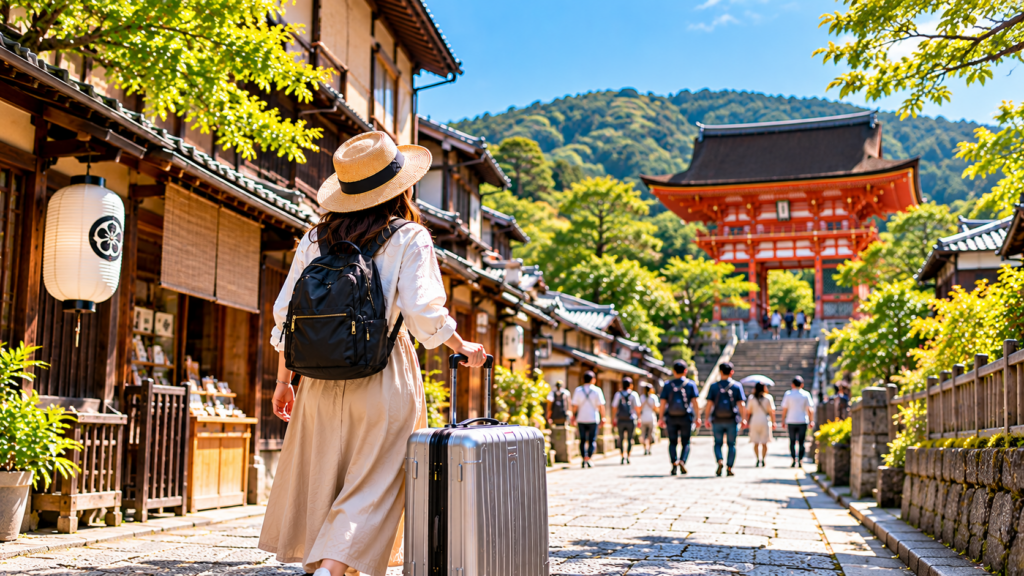
Case A: Arriving in Kyoto in the Morning
Situation: You arrive at Kyoto Station at 9:00 a.m., but hotel check-in is not until 3:00 p.m.
Your first option is to ask whether your hotel can store your suitcase before check-in.
If the hotel is far from the station, a station locker or staffed storage counter may be more convenient.
Consider your sightseeing route carefully. A locker at Kyoto Station is only useful if returning to the station fits your plans.
Best approach: Choose the storage location based on where you will finish sightseeing, not just where you arrive.
Case B: Traveling from Tokyo to Osaka by Shinkansen
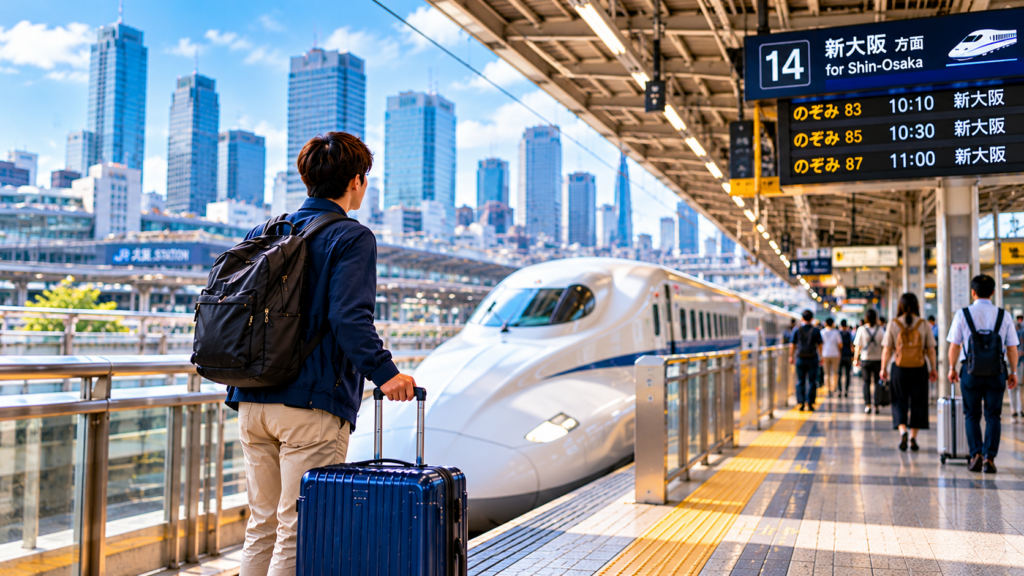
Situation: You are checking out of a hotel in Tokyo and heading to Osaka with a large suitcase.
If your Osaka hotel accepts deliveries and the timing works, sending your suitcase ahead may make the train journey easier.
However, if you need your luggage immediately upon arrival, carrying it may be more practical.
Check whether an oversized-baggage reservation is required for your train.
Best approach: Compare delivery timing with the convenience of keeping your bag on the train.
Case C: Sightseeing Before an Evening Flight
Situation: You check out of your hotel in the morning, but your international flight leaves in the evening.
You could leave your luggage at the hotel, use a station locker, or take it to an airport storage counter where available.
The best choice depends on your sightseeing location, airport transfer, and required check-in time.
Allow extra time for collecting your luggage, traveling to the airport, checking in, and passing through security.
Best approach: Work backward from your airport arrival deadline before choosing where to store your suitcase.
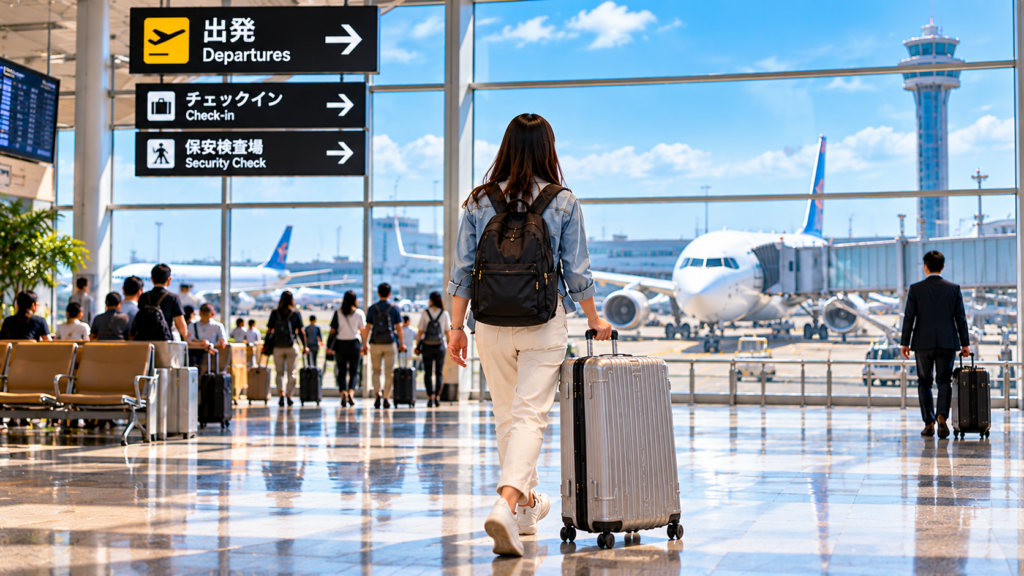
9. Final Tips: Travel Light and Enjoy Japan
Japan offers several convenient ways to avoid carrying a heavy suitcase throughout your trip.
For a short sightseeing stop, station coin lockers may be the easiest solution. Before hotel check-in, accommodation storage can be especially convenient. For travel between cities, luggage delivery can reduce the stress of moving through busy stations.
Whatever option you choose, always confirm luggage dimensions, payment methods, operating hours, pickup conditions, and delivery dates.
With a little planning, you can spend less time worrying about your suitcase and more time enjoying Japan.
Useful Official Resources
- Yamato Transport — Delivery Services
- ecbo cloak — Luggage Storage Booking
- JR Central — Shinkansen Travel Information
- Japan National Tourism Organization — Official Travel Information
Service availability, prices, baggage restrictions, and operating conditions may change. Check the latest information directly with the relevant provider before traveling.